There is one number in the Level 3 course that decides whether the rest of it counts, and in Mesquite it is usually the number students are least prepared for.
A 75% Floor, Written Into the Code
37 TAC §35.144(c) fixes the minimum passing grade on Level 3 and Level 4 school examinations at 75%. It is a short provision and it does not leave room for interpretation. Whichever DPS-approved school you take the course from, and whatever format the classroom material comes in, that is the line. The full chapter is public reading at 37 TAC Chapter 35 if you want to see it in context.
What makes it interesting is not the number itself but the expectation students bring in against it. In a metro market like eastern Dallas County, a large share of people enrolling in Level 3 already hold a Texas License to Carry. They have sat a written test about carrying a handgun, they passed it, and they mentally file the Level 3 exam in the same drawer. The trouble is that the commissioned officer standard sits higher than the License to Carry written test threshold, so the drawer is the wrong one.
The Part That Really Is Familiar
To be fair to the assumption, there is a real overlap. Just not where people think. It is on the range. The firearms proficiency exam for a commission is close to identical in format to the LTC proficiency exam, and under §35.145 the qualification may use either the DPS Primary Issued Handgun Qualification Course or the DPS Approved LTC Course. An LTC holder who has shot a qualification course before will recognize what is being asked of them. Worth adding that §35.146 sets out a shotgun course of fire for commissioned security officers as well, so there is an option to qualify with a shotgun alongside the handgun.
The classroom exam is a different animal because it is testing a different thing. A License to Carry is a private citizen’s permit. A security officer commission is an occupational authorization. The credential that allows an officer to carry a firearm on duty, under §35.141(a)(2), which also makes Level 3 the required course for personal protection officers. The material covers the law governing armed security work, use of force and the duties that attach to a commission, and the exam covers the material.
Treat the Online Half Like the Graded Half It Is
Level 3 is split. Part 1 is the classroom material and the written exam. Part 2 is in person: defensive tactics, firearms handling and the firearms proficiency exam. ETXSTA delivers Part 1 100% online, which is genuinely convenient for officers already working posts across the metroplex. It is also the part students consistently under-prepare for, precisely because it is the flexible one. The exam that decides whether you move forward lives in the online half, not the range half.
Two practical notes on scope. The online course price covers the online training only: the in-person firearms qualification is scheduled separately and is not included. And no part of the online portion involves firearms work, so nothing you do at home substitutes for the qualification.
Level 3 and Level 4 Are Not the Same Class
Because §35.144(c) names both, people sometimes assume Level 4 is simply the next grade up from Level 3. It is not. Level 4 is the personal protection officer course, the bodyguard credential, a separate course carrying a minimum of fifteen classroom hours under §35.141(a)(3). Level 3 is the commissioned security officer course. The 75% exam standard is something they share, not evidence that one contains the other.
Getting Commissioned From Mesquite
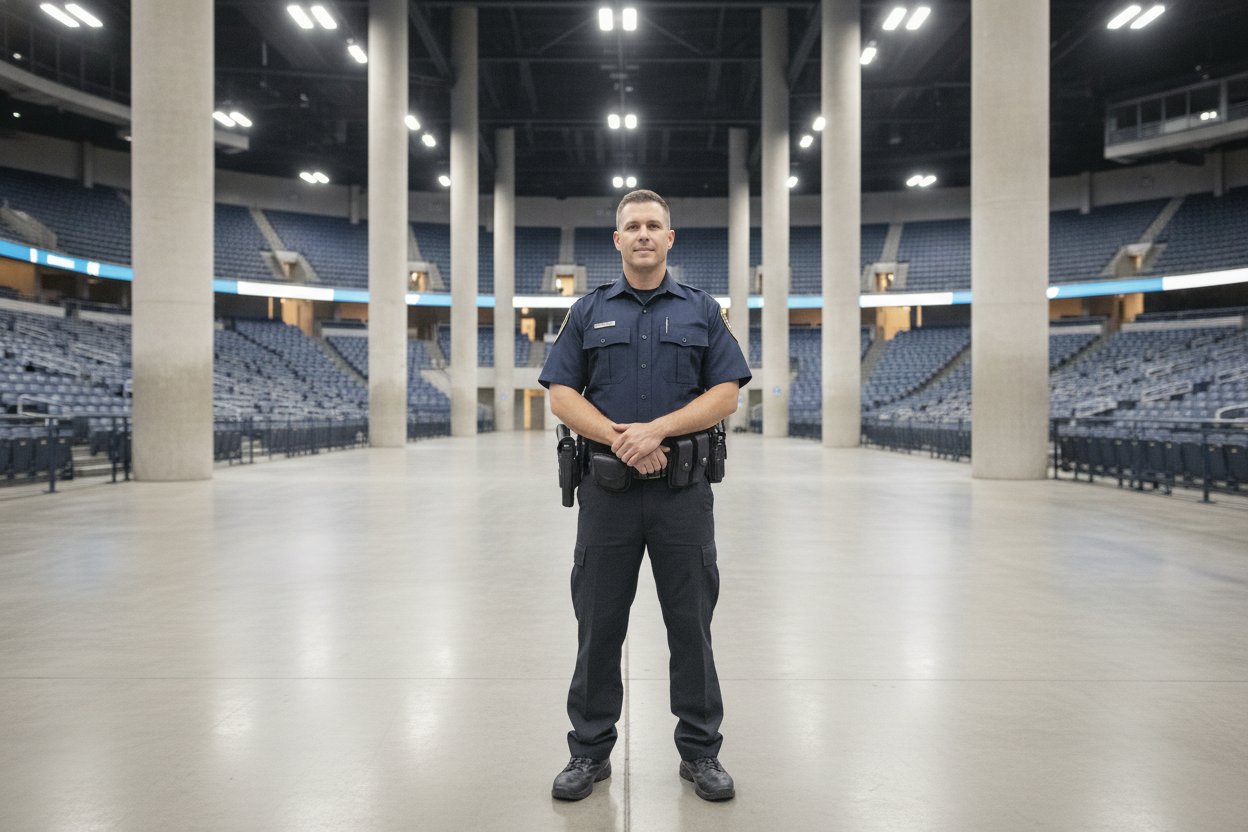
Mesquite sits on the eastern edge of the Dallas metro, where the arena and event business, the distribution and warehousing along the I‑635 and US‑80 corridors, hospital and retail center contracts and gated corporate property all generate armed post work. Officers here also tend to move between sites more than officers in smaller markets, and the commission goes with the officer rather than the employer, which is part of why it is worth having.
Passing the exam is not the same as being commissioned, though. DPS issues the commission on application, and §35.81(a) requires the application to include copies of both the Level 2 and the Level 3 certificates of completion plus the department’s other listed items, so hang on to the paperwork from your Level 2 class. Level 3 itself may only be taught by a DPS-approved school using a DPS-approved instructor with material prepared by and obtained from DPS; unlike Level 2, an employer cannot run it in-house with a designee. Under §35.147 the school issues your original certificate, the PSP 30, within seven days of qualifying and holds training records for 24 months. From there, the renewal course keeps the commission alive, licensing runs through the Texas DPS Private Security Bureau, and our FAQ page handles the rest.
Leave a Reply