Most write-ups of Level 3 stop at “pass the class.” For a Lubbock officer trying to get on an armed post, the interesting part starts the moment the class ends: so here is the timeline from there.
Day Zero: You Qualify
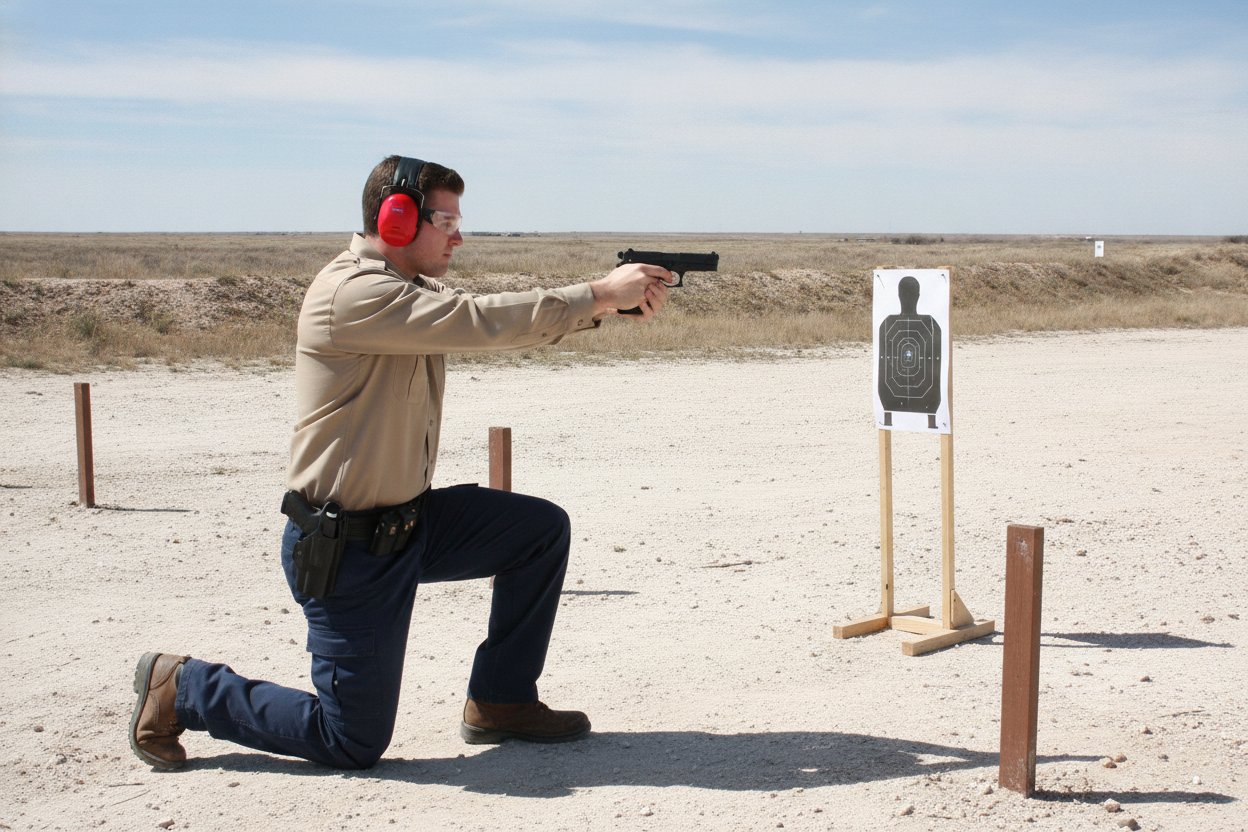
Qualifying means clearing both halves of the course: the written exam from the online classroom portion and the in-person firearms proficiency exam. The written bar is set by §35.144(c). The minimum passing grade on Level 3 and Level 4 school examinations is 75%. That is higher than the written threshold on a Texas License to Carry, which trips up people who assume the two tests are cousins. On the range, §35.145 allows the qualification to run on the DPS Primary Issued Handgun Qualification Course or the DPS Approved LTC Course, and the format is close to identical to the LTC proficiency exam. §35.146 sets out a separate shotgun course of fire for commissioned security officers, so qualifying with a shotgun alongside the handgun is an option if you want it.
Within Seven Days: the Certificate
Under §35.147, an approved school issues the original certificate of completion to a qualifying student within seven days of qualifying. On this site the certificate is referred to as PSP 30. Hold on to it the way you would hold on to a title, and understand what it is. PSP 30 is not a commission. It is evidence of completed training. The security officer commission is issued by the Texas DPS Private Security Bureau after you apply. Nothing a school gives you authorizes you to carry on a post by itself.
Next: an Application That Wants Two Certificates
Here is the step that delays people. §35.81(a) requires the application for a security officer commission to carry copies of both the Level 2 and the Level 3 certificates of completion, plus the other items DPS specifies. Not the newest one. Both. Your Level 2 certificate remains part of your permanent training record, and if you cannot lay hands on it, the armed application does not move. Dig it out before you need it.
For the Next 24 Months: the School’s Copy
The same section, §35.147, requires the approved school to retain training records for 24 months. That is a two-year window in which a lost certificate is an inconvenience rather than a disaster. It is also a reason to care which school you train with: the record has to live somewhere, with an organization that is still answering the phone when you call about it eighteen months later.
Rewinding: How You Get to Day Zero
Under 37 TAC §35.141(a)(2), the Level 3 course is required for anyone seeking a security officer commission, the credential that allows an officer to carry a firearm on duty, and for personal protection officers. The material is prepared by and obtained from DPS, and Level 3 may only be delivered by a DPS-approved school using a DPS-approved instructor. Unlike Level 2, a licensed company cannot run it internally with its own designee.
- Part 1: online. The law governing armed security work, use of force, the duties that attach to a commission, and the written exam. ETXSTA runs this 100% online.
- Part 2: in person. Defensive tactics, firearms handling and the firearms proficiency exam.
- Cost structure. The online course price covers the online training only; the in-person firearms qualification is scheduled separately and is not included.
Worth stating before somebody enrols in the wrong class: Level 3 is the commissioned security officer course, while Level 4 is the personal protection officer course: the bodyguard credential, a separate course with a minimum of fifteen classroom hours under §35.141(a)(3). The rules are all public in 37 TAC Chapter 35 if you want to check any of this yourself.
What a Commission Opens Up on the South Plains
Lubbock is the service center for a huge stretch of the South Plains, and that shows up in the security work. The medical district and regional hospitals run around the clock, there is a large university and student-housing footprint, agricultural processing, cotton warehousing and grain facilities ring the city, and the wind and energy operations out on the plains bring their own perimeter and remote-site needs. Add banking branches, distribution to the smaller towns for a hundred miles in every direction, and event work, and armed posts are a steady category rather than a novelty.
Distance is the other West Texas reality. Doing the classroom half online means one trip for the in-person qualification instead of several for a whole course. Once you are commissioned, the renewal course keeps it current, and our FAQ page answers the questions that come up between those two points.
Leave a Reply