
More Killeen students walk into the Level 3 firearms qualification with real weapons experience than in almost any other Texas city. That experience is worth something on the firing line: and it is worth being straight about what it does not do.
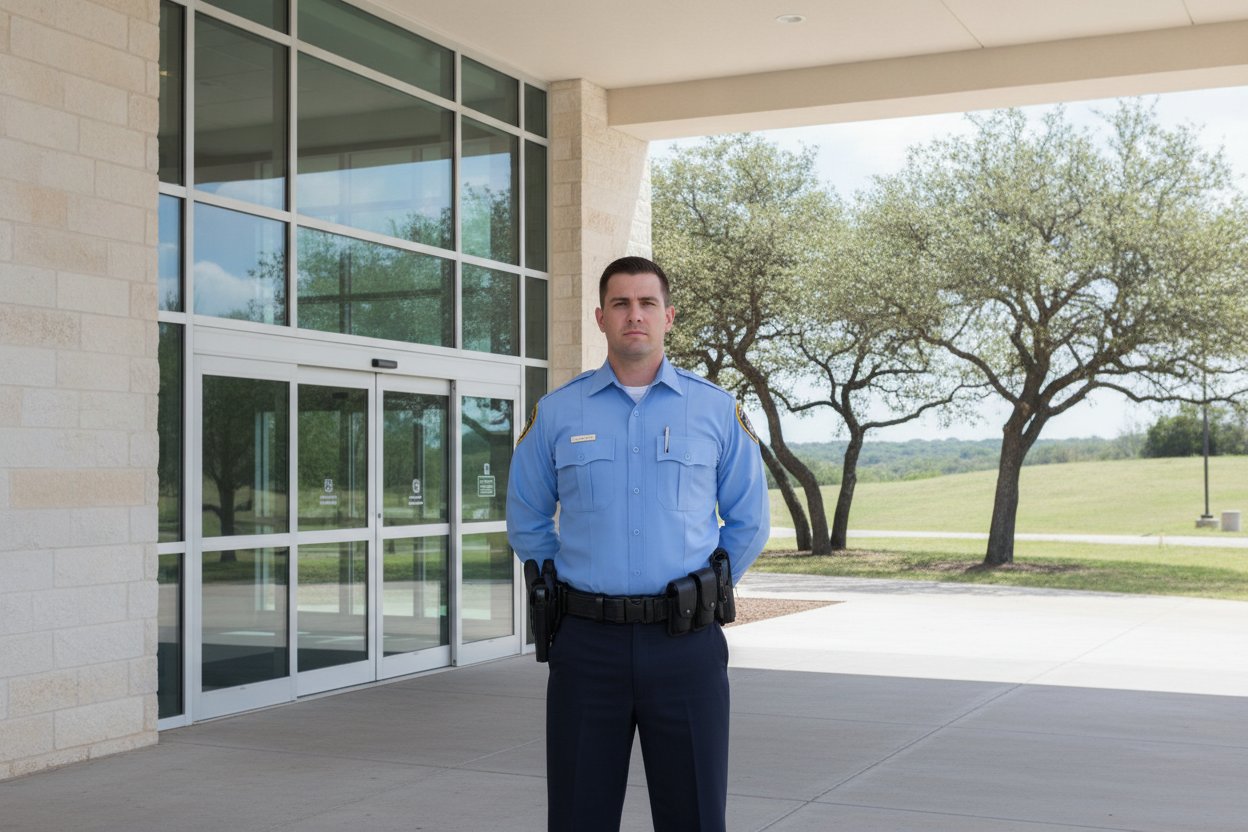
The Range Day, for People Who Have Shot a Lot
Let us set expectations accurately in both directions. The Level 3 firearms proficiency exam is close to identical in format to the Texas License to Carry proficiency exam. It is a fixed, published course of fire at set distances against a scored target. For a student who has spent years qualifying on military ranges, the mechanics will feel undemanding, and that is a fair thing to say out loud rather than pretend otherwise.
What experience does not do is exempt you. There is no credit, no waiver and no shortcut on the basis of prior service or prior qualification. You complete the course and you shoot the qualification like every other student. Two adjustments catch experienced shooters off guard more often than any accuracy problem: this is a civilian legal framework rather than a rules-of-engagement framework, and the course of fire is the state’s, not one you have run before.
Which Course of Fire You Will Actually Shoot
Under §35.145, the qualification may be conducted using the DPS Primary Issued Handgun Qualification Course or the DPS Approved LTC Course. Both are recognized for commissioned security officers. Separately, §35.146 lays out a shotgun course of fire, which gives students the option to qualify with a shotgun in addition to the handgun. It is an option, not an obligation, and it is one of the few places where prior long-gun familiarity translates directly. All of this is published in 37 TAC Chapter 35.
Working Back to the Classroom
The range sits inside Part 2, the in-person half, which covers defensive tactics, firearms handling, and the firearms proficiency exam. Part 1 comes first and East Texas Security Training Academy delivers it 100% online: the law governing armed security work, use of force, the duties that attach to a commission, and the written examination. No firearms work happens in the online portion.
This classroom half is where prior service helps least, and it is not a knock on anyone. Texas use-of-force law governing a private citizen employed to protect property is a genuinely different body of rules from anything learned in uniform. Treat it as new material, because it is.
Two practical points about scheduling and cost: the online course price covers the online training only, and the in-person firearms qualification is scheduled separately and is not included. For students working around shift rotations or a transition timeline, the fact that Part 1 is fully online is usually the most useful feature of the whole arrangement.
Seventy-Five Percent, and Two Course Numbers Worth Keeping Straight
§35.144(c) sets the minimum passing grade at 75% on Level 3 school examinations. That is a higher bar than the License to Carry written test, and it is the reason we push back gently on students who assume the written half is a box to tick.
On the course numbers: Level 3 is the commissioned security officer course, the credential that allows an officer to carry a firearm on duty. Level 4 is the personal protection officer course: the bodyguard credential, a separate class with a minimum of fifteen classroom hours under §35.141(a)(3). Level 4 is not a senior armed tier and Level 3 is not a prerequisite grade of it. §35.141(a)(2) does require Level 3 for both a security officer commission and for personal protection officers, which is where the crossed wires come from. This matters in Killeen specifically, because executive protection work attracts people leaving the service and the two courses get advertised interchangeably by people who should know better.
Certificates and the Application
- The certificate of completion is referred to on this site as PSP 30.
- Under §35.147, an approved school issues the original certificate to a qualifying student within seven days of qualifying and retains training records for 24 months.
- Under §35.81(a), the commission application requires copies of both the Level 2 and the Level 3 certificates of completion, plus the other items DPS lists, so hold on to the Level 2 certificate you earned first.
- Course material is prepared by and obtained from DPS, and Level 3 may only be taught by a DPS-approved school using a DPS-approved instructor. A licensed company cannot deliver it in-house, which it can for Level 2.
- Completing the course is not the commission. The commission is issued by DPS on application.
The Killeen Pipeline
Killeen sits alongside one of the largest Army installations in the country, and the effect on the local labor market is impossible to miss: a steady flow of separating soldiers, spouses and veterans looking for work that uses what they already know how to do. Private security is one of the most natural landing spots, and the commissioned side of it is where the better-paid contracts tend to sit. Hospital and medical district posts, banking, gated residential and corporate property, and the retail and logistics sites spread along the Central Texas corridor between here and Temple.
The honest framing is this: your background makes you a strong candidate and a comfortable student. It does not make you licensed. The course and the qualification are still required, and the credential you end up holding is a Texas civilian one issued by the Texas DPS Private Security Bureau, kept current afterwards through the armed security renewal course. If you are unsure where you fall in the sequence, our FAQ page and the class list are the fastest way to find out before you pay for anything.
Leave a Reply