
The most common way a security career in Beaumont fails to start is that somebody assumes the first class involves a gun, decides they are not ready for that, and never signs up for anything. The first class does not involve a gun.
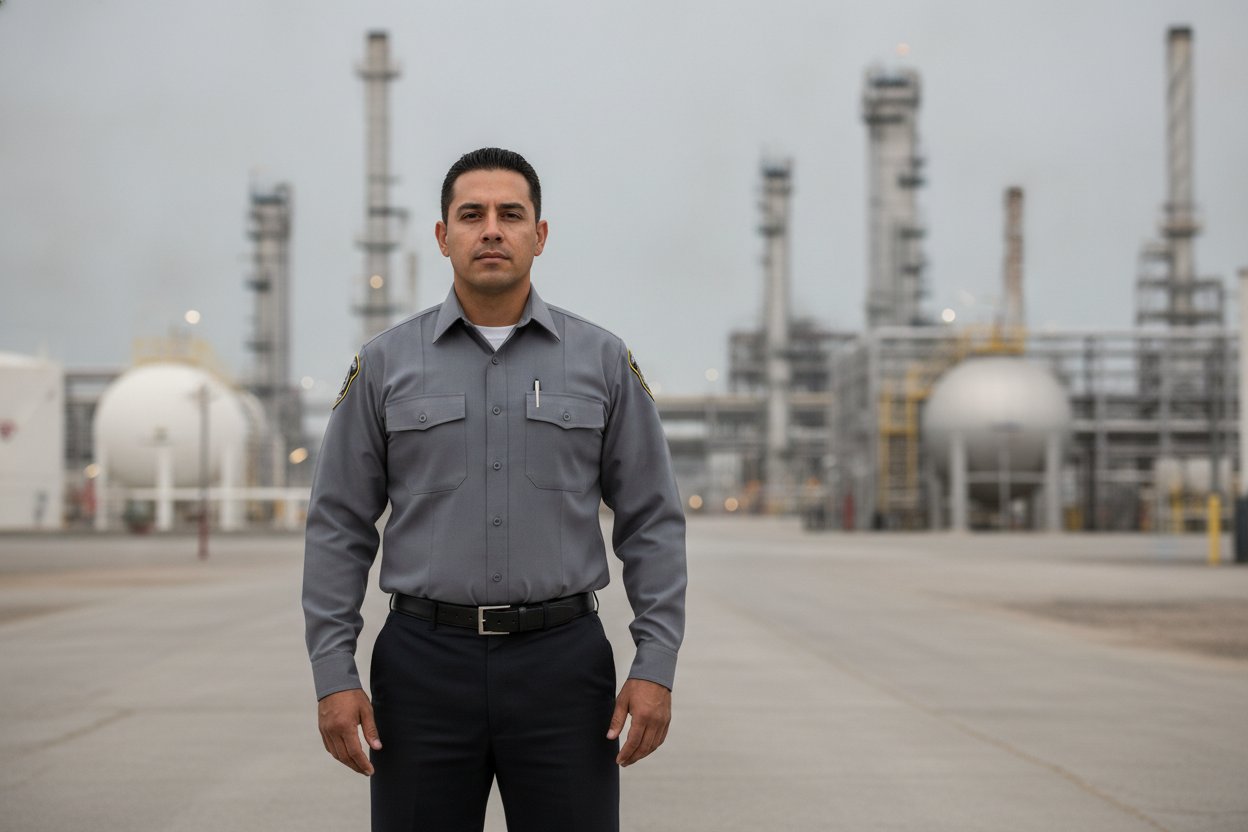
Clearing Up the Misconception First
Level 2 is the entry-level, unarmed security course in Texas. It contains no firearms training and no firearms qualification: no range time, no weapon handling, no defensive tactics of any kind. Finishing it does not permit you to carry a firearm on a post and does not make you a commissioned officer. If the idea of being handed a weapon in week one is what has kept you out of the industry, that concern simply does not apply to this course.
What it is instead: the class the state requires before you can hold a license. 37 TAC §35.141(a)(1) provides that Level 2 must be completed by anyone applying for a non-commissioned security officer license. Non-commissioned is the unarmed license. It is the license most working security officers in Southeast Texas actually hold.
A Course Built for Somebody With No Background
The material is prepared or approved by the Texas Department of Public Safety, and it assumes you are starting from zero. Four areas:
- Texas security law. Who you are on that property, what you may do, and the line you do not cross.
- Professional responsibilities of a security officer. The actual daily work: presence, observation, accurate documentation, clean handoffs.
- Emergency procedures. What to do in the minutes before anyone else arrives.
- Ethics. The pressure situations that end careers, discussed before you meet one.
None of that requires you to have worn a uniform before. It requires you to pay attention.
The Paper That Comes Out the Other End
Completion produces a certificate of completion, the PSP 36, and that certificate must be submitted with the license application. For a first-timer this is the moment the abstraction becomes concrete: you now hold the one document that every “must be licensed” job posting in the region is really asking about.
There is more than one legal way to get that certificate. Under §35.141(a)(1), §35.142 and §35.143, Level 2 may be taught by the licensee’s own designated person or by a DPS-approved school with a DPS-approved instructor. The in-house route is real but circular for a newcomer, since it presumes an employer who has already taken you on. A DPS-approved school course delivered 100% online reverses the order: you show up qualified. It is also worth filing away that this dual option is unique to Level 2. The commissioned course has no in-house alternative at all.
Southeast Texas Runs on Access Control
Beaumont anchors a stretch of the upper Gulf Coast built around refining, petrochemical processing, port and marine traffic and the contractor economy that serves all three. Industrial sites of that kind live and die by knowing who is on the property, which makes gate posts, contractor check-in, badge desks and vehicle logs a permanent category of work, and most of it is unarmed. Beyond the plants, the Golden Triangle carries the usual mix of hospital and clinic entrances, school and campus front desks, retail centers, apartment communities, hotels, municipal buildings and event venues. Hurricane season adds its own rhythm, because storm preparation, shutdowns and the recovery period afterward all raise demand for officers who can control a site.
For a career-starter, that mix is encouraging: turnover on industrial contracts means postings open regularly, and the license travels with you rather than with the employer.
Where the Ladder Goes From Here
Level 2 is the required first step toward a security officer commission, but it is only the first step and never the whole journey. It does not lead to a commission by itself. Carrying a firearm on duty means holding a commission, and that means the Level 3 course, which is a separate class with its own firearms requirements. After that, staying commissioned means keeping up with the armed renewal course on schedule.
Until then, you carry no continuing education burden at all: §35.161(b) specifically exempts noncommissioned security officers from those requirements. The rules are public if you want to read them yourself in 37 TAC Chapter 35, and every course we run is laid out on the class list if you want to see the whole progression before you start it.
Leave a Reply