
The single most common question we get from Richardson officers about renewal is not about the law at all. It is about scope: what exactly am I buying, and what still has to happen after I finish it?
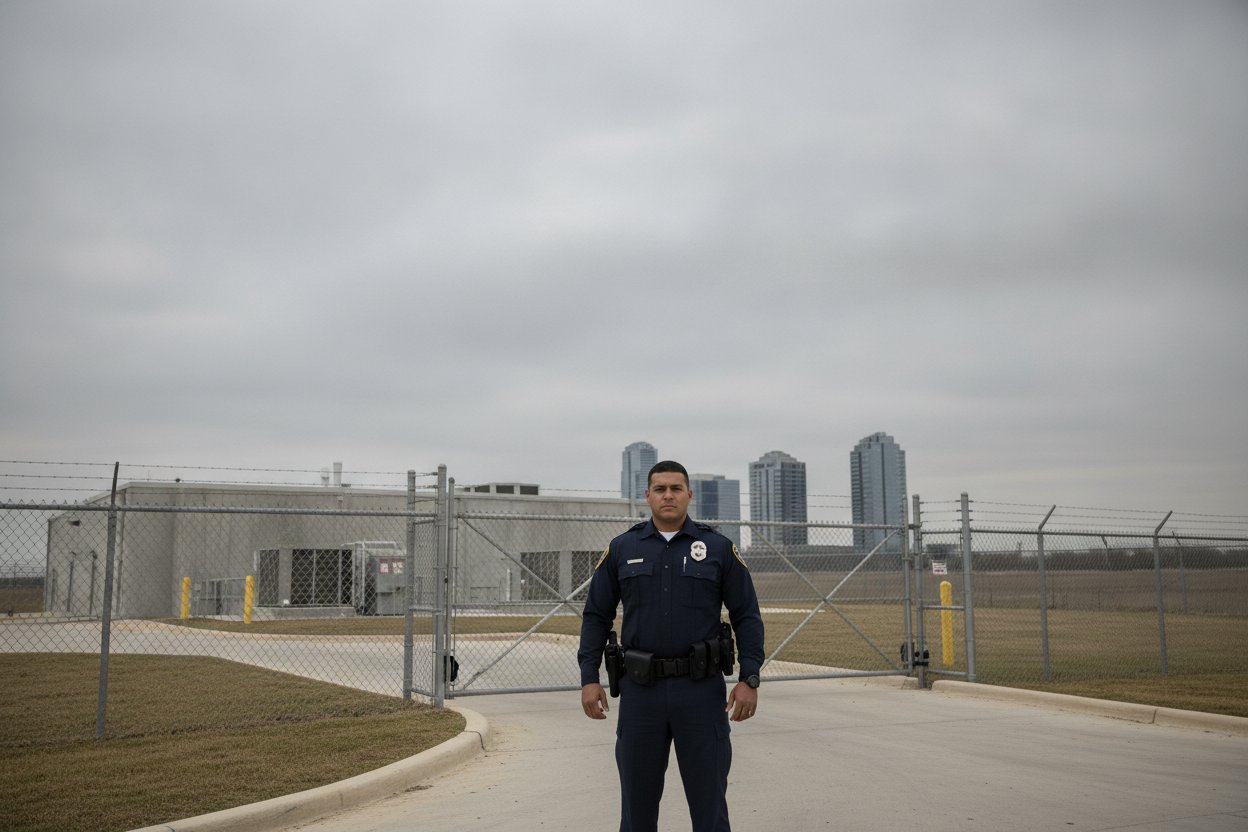
Renewal for a commissioned officer in Texas is really two obligations that people tend to collapse into one. There is classroom continuing education, and there is firearms proficiency. Our online course handles the first completely and the second not at all. On purpose. Here is the split, item by item.
Included: the six classroom hours, start to finish
- All six hours of continuing education required by §35.161(g), delivered 100% online.
- The renewal portions of the Level III or Level IV course, as applicable: which is precisely how §35.161(g) says the hours are to be earned.
- Instruction by a department-approved training school and instructors, which the same rule requires.
- Your certificate of completion, referred to on this site as PSP 31.
That approved-school condition is worth pausing on, because two other provisions make it airtight for armed officers. §35.162(d) says the in-house continuing education exemption open to companies with ten or more licensed employees does not apply to commissioned security officers or personal protection officers. §35.162(f) says credits earned through outside entities may not be used to satisfy their requirement. So if your contract employer runs its own training days, those days are useful, but they are not your CE.
Not included: the range day
The price of the online course covers the online training only. The in-person firearms qualification is not included and must be scheduled separately once you have finished the classroom portion. Nobody qualifies on a laptop, and we would rather say so up front than have you discover it at the end.
This matters because of what §35.161(g) asks you to hand in. A commissioned security officer must submit a firearms proficiency certificate with the renewal application. Your CE certificate alone does not complete the file. Plan the two pieces as a sequence, hours first, range second, application third, rather than assuming one purchase closes out the whole obligation.
If a shotgun is on your authorization
The shotgun rules add their own in-person line item. §35.146(b) sets a biennial familiarization of six rounds of “00” buckshot in connection with renewal of a commissioned security officer. Like the handgun qualification, that happens on a range, not in a browser, and it is not part of what you buy here.
Why the online half suits Richardson posts
Richardson sits in the middle of the North Dallas telecom corridor, and the armed work here skews toward things that run around the clock: data centers and network facilities, corporate campuses along the US‑75 spine, medical office buildings, and the distribution and light-industrial properties spreading east toward the President George Bush Turnpike. Those are twelve-hour posts and rotating schedules. Taking six consecutive hours out of that to sit in a classroom somewhere else in the Metroplex is the part officers actually struggle with, so we removed it. You can work the hours around a rotation and keep the one trip that genuinely has to be a trip.
Timing, and who this is not for
Under §35.161(n), continuing education counts only if it was completed within the two-year period preceding the license’s current expiration date: a validity window rather than a fixed renewal rhythm, so hours taken too early simply fall outside it. And §35.161(a) provides that a renewal application may not be submitted until the required minimum hours have been earned.
Working unarmed? Then none of this is yours to worry about: §35.161(b) exempts noncommissioned security officers from continuing education, and the Level 2 non-commissioned course is the credential you renew on its own terms. Been out of the industry a while? §35.141(d) requires someone inactive or expired who has not been employed in the industry for three years or more to submit current training certificates to the department. In which case the full Level 3 commissioned course is likely the right purchase instead of this one. And service members should know that §35.182 grants two additional years to complete a CE or other renewal-related requirement, with §35.181 waiving late-renewal penalty fees.
The records that come with it
- §35.162(b)(3): the certificate shows your name and license number, the date of attendance, the number of hours and the courses attended, signed and dated by the school director. The school keeps its records two years.
- §35.161(m): you keep your certificate of completion for two years and furnish copies to the department on request.
- §35.161(a): your employer maintains proof in your personnel file, and you indicate completion on the renewal application.
One last distinction, since the two credentials share this pathway: Level 3 is the commissioned security officer and Level 4 is the personal protection officer. A bodyguard credential, not a higher grade of commission. Each renews through the renewal portion of its own course. You can read the language yourself in 37 TAC Chapter 35, licensing questions belong with the Texas DPS Private Security Bureau, and our FAQ page handles the situations this article does not.
Leave a Reply