
A four-officer company in Marshall runs into the same renewal rules as a four-hundred-officer company in Dallas. The difference is that nobody in a small shop has “compliance” in their job title.
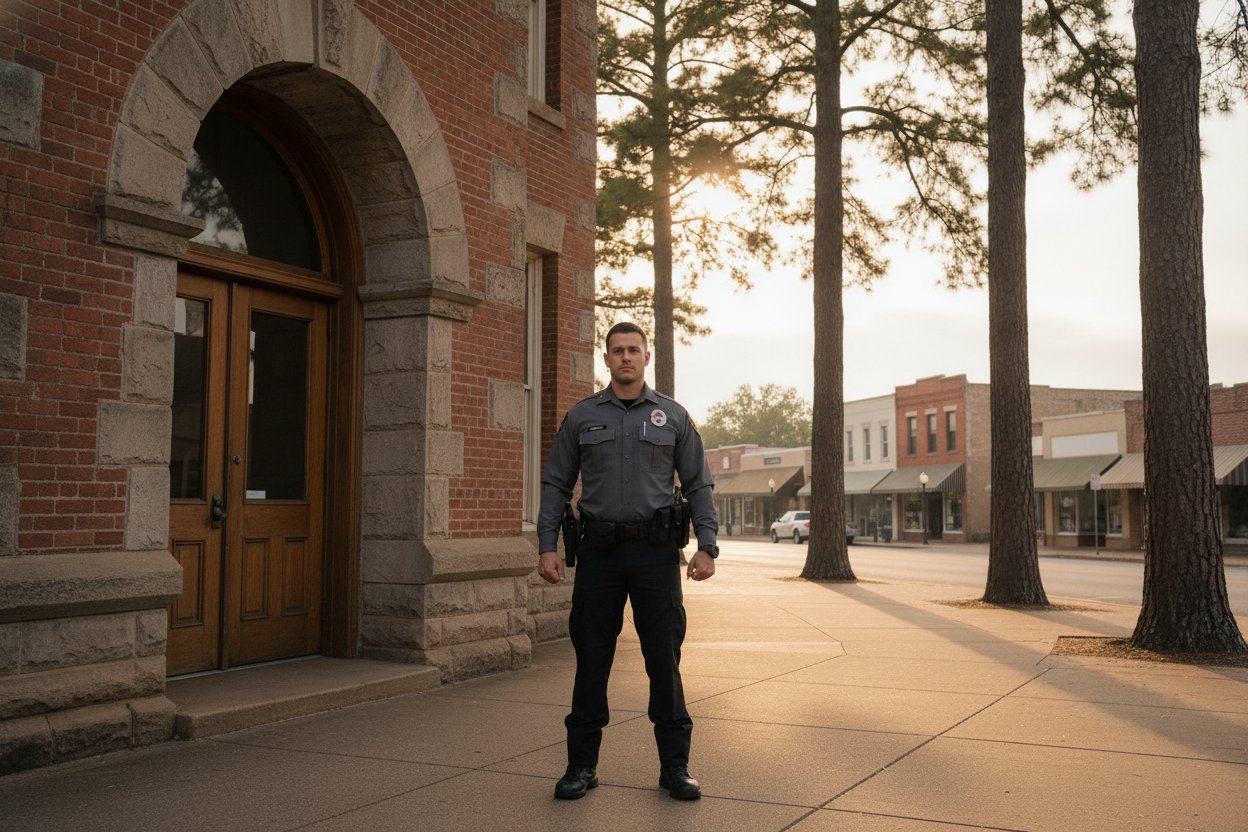
Armed security work in Harrison County tends to be steady rather than dramatic. A plant gate, a hospital entrance, a bank lobby, a church campus on Sunday mornings, occasional coverage for events downtown. The companies serving it are usually small, often a working owner with a handful of officers, and the renewal calendar lives in somebody’s head or a spreadsheet. Historically, when it came time for continuing education, it meant a drive to Tyler or Longview and a day off the schedule for whoever was going. Since this course runs online, that part of the problem is solved. The paperwork part is not, and that is where small operations get caught.
Two Rules That Decide Everything Else
Start with what is owed. Under §35.161(g), commissioned security officers and personal protection officers must complete six hours of continuing education, satisfied by completing the renewal portions of the Level III or Level IV training course, as applicable, and all of it taught by department-approved training schools and instructors. A commissioned security officer must also submit a firearms proficiency certificate with the renewal application.
Then look at who holds the receipt. §35.161(a) says a renewal application may not be submitted until the minimum hours are earned, that proof must be maintained by the employer in the employee’s personnel file, and that the licensee indicates completion on the application. That is a filing duty written directly into the rule. In a small company it is nobody’s assigned task, which is exactly why it gets missed. Separately, §35.161(m) tells the officer to keep their own certificate for two years and furnish copies to the department on request, so both sides should be holding a copy, not just one.
“We Can Just Train Them Ourselves”. No
There is an in-house continuing education exemption in the rules for companies with ten or more licensed employees. Owners hear about it and assume it is the cheap way through. Two provisions say otherwise for anyone carrying a firearm on post:
- §35.162(d): the in-house exemption does not apply to commissioned security officers or personal protection officers.
- §35.162(f): continuing education credits earned through outside entities may not be used to satisfy the requirement for commissioned security officers or personal protection officers.
Put those beside the §35.161(g) requirement that the instruction come from approved schools and instructors and the conclusion is narrow: an armed officer’s six hours come from a department-approved school, full stop. That is true whether the company has four officers or four hundred.
Don’t Send Everyone at Once
The natural instinct in a small shop is to knock it out for the whole crew in one go. Be careful. §35.161(n) provides that continuing education is only valid if completed within the two-year period preceding the license’s current expiration date. That window belongs to each license individually. Hours taken outside it do not count, and an officer who sat through a class too early has spent a day and gained nothing.
Who is not on the list
Unarmed staff are outside all of this. §35.161(b) specifically exempts noncommissioned security officers from continuing education, so an officer working on a Level 2 non-commissioned license has nothing to schedule. And keep the armed credentials distinct on your roster: Level 3 is the commissioned security officer, Level 4 is the personal protection officer. A bodyguard credential, not a promotion above Level 3. They share a renewal pathway under §35.161(g) only because each is pointed to the renewal portion of its own course.
What Goes in the File
§35.162(b)(3) sets out what a continuing education school’s certificate of attendance has to show: the attendee’s name and license number, the date of attendance, the number of hours, and the courses attended, signed and dated by the school director, with the school retaining records for two years. Here that document is the PSP 31. Our online renewal course covers the online training only; the in-person firearms qualification is not included and must be scheduled separately afterward. If a post authorizes a shotgun, §35.146(b) sets a biennial familiarization of six rounds of “00” buckshot in connection with renewal of a commissioned security officer, which happens on the range side.
Two edge cases small employers hit more often than they expect. If you are bringing back someone who has been out of the industry, §35.141(d) requires a person inactive or expired and not employed in the industry for three years or more to submit current training certificates to the department. That person may need the full Level 3 commissioned officer course instead of a renewal. And if an officer is a military service member, §35.182 grants two additional years to complete a continuing education or other renewal-related requirement, with §35.181 waiving late-renewal penalty fees for service members.
The full text is public in 37 TAC Chapter 35, licensing sits with the Texas DPS Private Security Bureau, and everything we offer is listed on our classes page.
Leave a Reply