
A Laredo officer finishes Level 3, passes the exam, qualifies on the range — and then waits for a piece of paper. That paper is the part almost nobody explains properly, so let’s start there instead of at the end.
The Document Is Called PSP 30
The certificate of completion for Level 3 is referred to as PSP 30. It is the evidence that you sat the approved course and met the standard. It is not a licence, it is not a commission, and it does not by itself authorise you to carry a firearm on a post in Webb County or anywhere else. The Texas DPS Private Security Bureau issues the security officer commission on application. Training produces the paperwork; the department produces the credential.
People get this wrong in both directions. Some assume the certificate is the commission and show up to a post with it. Others assume the certificate is a formality and throw it in a drawer. Neither is right: it is one required attachment in a file that DPS reviews.
Seven Days Out, Twenty-Four Months On File
§35.147 sets two deadlines that run in opposite directions. An approved school must issue the original certificate of completion to a qualifying student within seven days of qualifying — so this is not an open-ended wait, and if a school is vague about when your paperwork is coming, the rule gives you a number to point at. The same section requires the school to retain training records for 24 months. That second obligation is the quiet one that saves people: if a certificate goes missing during a move or a job change, the record of your training still exists at the school for two years.
Your Application Needs Two Certificates, Not One
This is where applications stall. Under §35.81(a), the application for a security officer commission requires copies of both the Level 2 and the Level 3 certificates of completion, along with the other items DPS lists. Your Level 2 certificate does not get superseded when you go armed — it stays part of your file permanently. If you completed Level 2 years ago through an employer and never kept a copy, sort that out before you start assembling the commission application, not after.
What You Actually Have to Do to Earn It
Under 37 TAC §35.141(a)(2), the Level 3 course is required for anyone seeking a security officer commission — the credential that allows an officer to carry a firearm on duty — and for personal protection officers. The course material is prepared by and obtained from DPS, and Level 3 may only be taught by a DPS-approved school using a DPS-approved instructor. Unlike Level 2, a licensed company cannot have its own designee deliver this one in-house.
- Part 1, online. The classroom material: the law governing armed security work, use of force, the duties that attach to a commission, and the written exam. ETXSTA delivers this 100% online.
- Part 2, in person. Defensive tactics, firearms handling, and a firearms proficiency exam.
- The application. Certificates, and everything else DPS requires under §35.81(a).
One practical note on cost structure: the online course price covers the online training only. The in-person firearms qualification is scheduled separately and is not included. Budget and plan for it as its own step.
75% Is the Line
The minimum passing grade on Level 3 and Level 4 school examinations is 75% under §35.144(c). That is a higher bar than the written test for a Texas License to Carry, which catches out people who assume the two are equivalent. On the range side, §35.145 allows the qualification to use the DPS Primary Issued Handgun Qualification Course or the DPS Approved LTC Course, and the format is close to identical to the LTC proficiency exam. §35.146 also sets out a shotgun course of fire for commissioned officers, so qualifying with a shotgun in addition to a handgun is an available option. You can read all of it in 37 TAC Chapter 35.
While we are being precise about paperwork: Level 3 is not Level 4. Level 3 is the commissioned security officer. Level 4 is the personal protection officer — the bodyguard credential — a separate course with a minimum of fifteen classroom hours under §35.141(a)(3). They are different courses with different certificates.
Why It Matters in Laredo
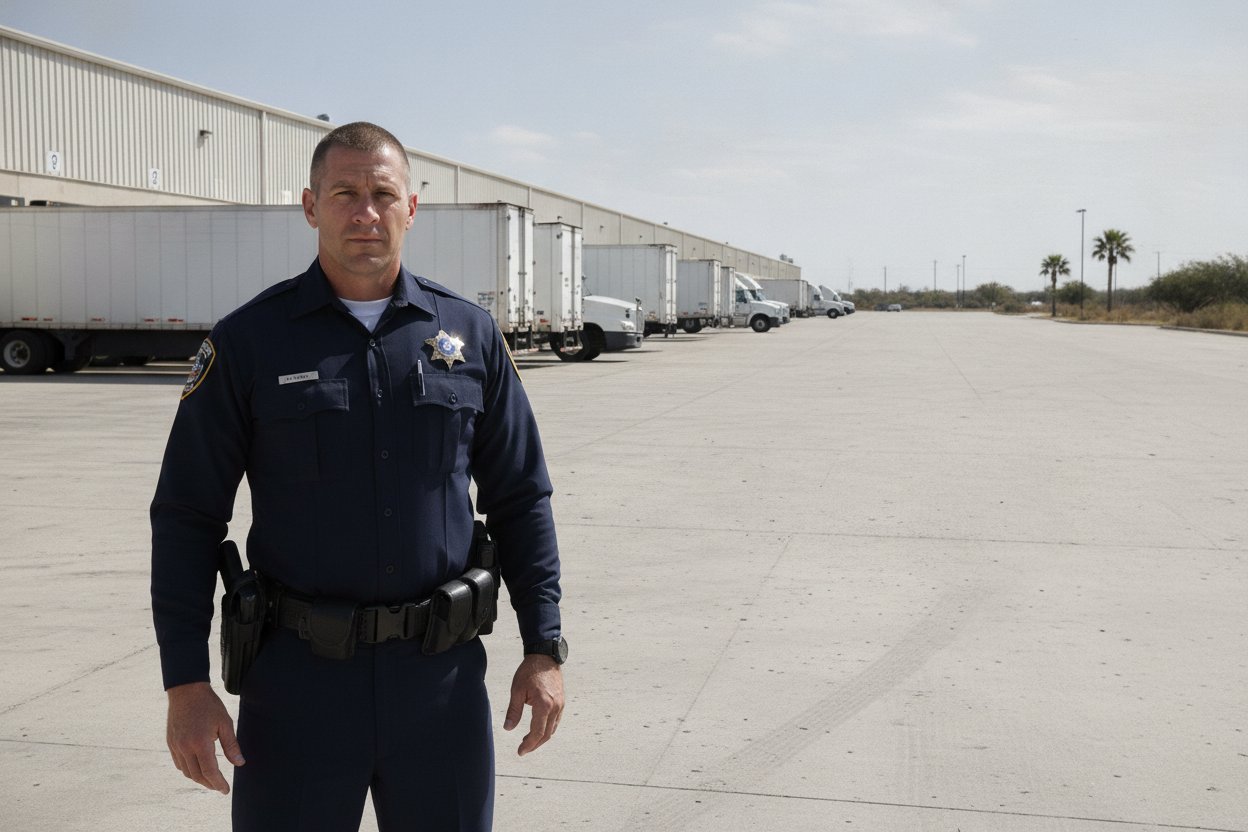
Laredo runs on freight. The warehouse and transload corridors that feed the international bridges generate a steady demand for armed coverage on high-value loads, yard gates and after-hours facilities, and those contracts tend to be document-driven — the client wants to see credentials in the file before an officer is assigned, not after. Add the hospital and medical district posts, the bank and credit union branches along the main commercial corridors, and the gated campuses, and a commission is the difference between being considered for a post and not.
Getting Part 1 done online matters more here than in a metro with a training school on every side of town. You keep your shift and finish the classroom half from home, then schedule the in-person portion once. Afterwards, the armed security renewal course is what keeps the commission current. Questions about your particular situation are usually answered on our FAQ page, and the full class list shows how the three courses fit together.
Leave a Reply