
In a town the size of Gilmer, plenty of people who ask about going armed on a security post have been shooting since they were kids. The qualification still surprises them: not because it is hard, but because it is nothing like a day at the deer lease.
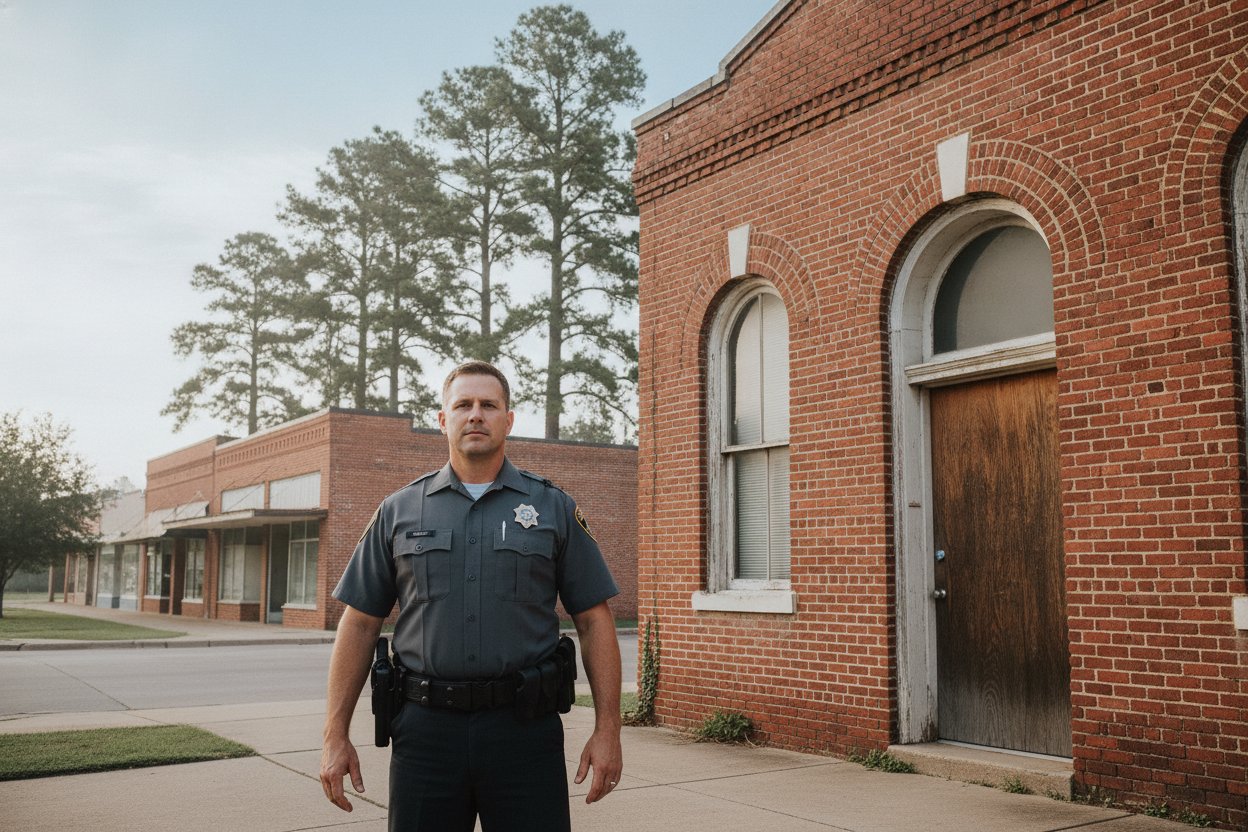
The Proficiency Exam, Described Honestly
The firearms proficiency exam in Part 2 of the Level 3 course is close to identical in format to the Texas License to Carry proficiency exam. If you took the LTC test, you already know the shape of the day: a marked firing line, set distances, a course of fire announced in advance, and a scored target at the end. It is a standardized demonstration, not a tryout.
What makes it official is §35.145 of the Texas Administrative Code, which specifies that the qualification may use the DPS Primary Issued Handgun Qualification Course or the DPS Approved LTC Course. Then there is a provision most people have never heard of: §35.146 lays out a shotgun course of fire for commissioned security officers, so you have the option to qualify with a shotgun in addition to the handgun. It is optional, and it is in the rule. You can confirm both in 37 TAC Chapter 35.
The Order Things Happen In
- You complete Part 1 online: the law governing armed security work, use of force, the duties that attach to a commission, and the written exam.
- You schedule Part 2 in person: defensive tactics, firearms handling, and the firearms proficiency exam described above.
- You receive your certificate of completion, referred to here as PSP 30. Under §35.147 an approved school issues the original to a qualifying student within seven days of qualifying, and keeps the training records for 24 months.
- You apply to DPS for the commission itself. Finishing the course is not the commission. DPS issues that on application.
Two budgeting notes that belong in step two rather than step one: the online course price covers the online training only, and the in-person firearms qualification is scheduled separately and is not included.
The Written Exam Is Where People Actually Stumble
Under §35.144(c) the minimum passing grade is 75%. That is a higher threshold than the License to Carry written test, which is worth flagging because good shooters sometimes walk in assuming the classroom half is a formality. It is not. Use of force is the reason the commission exists, and the state examines on it accordingly.
Course material is prepared by and obtained from DPS, and Level 3 may only be taught by a DPS-approved school with a DPS-approved instructor. Unlike the Level 2 class, a licensed company cannot have its own designee deliver Level 3 in-house. A detail that matters in a rural market where an employer might otherwise offer to handle it themselves.
Level 3 Is Not Level 4
§35.141(a)(2) requires Level 3 both for a security officer commission and for personal protection officers, which is exactly why the numbers get muddled. To be clear: Level 3 is the commissioned officer course. Level 4 is the personal protection officer, the bodyguard credential, a separate course with a minimum of fifteen classroom hours under §35.141(a)(3). It is not a higher grade of armed guard license.
Doing This From Upshur County
Gilmer is a small town, and the armed security work around here does not look like a downtown high-rise contract. It looks like oil and gas service yards and equipment storage out in the county, timber and industrial property, hospital and clinic posts in the nearby larger towns, banking branches, and gated or remote sites where an officer may be the only person there for a long stretch. A commission travels with the officer rather than the employer, which matters more in a rural labor market than an urban one. It widens the radius of jobs you can take without retraining.
There is also a geography advantage worth naming. East Texas Security Training Academy is based in this corner of the state rather than in a metro, so Gilmer students are not building a Dallas or Houston drive into their plans the way officers in a lot of small Texas towns have to. When the commission is issued, the renewal course is what keeps it current, and licensing runs through the Texas DPS Private Security Bureau. Our FAQ page covers the odd cases people call about.
Leave a Reply