
The rule is one paragraph long. The confusion comes from who is reading it: and in Lubbock three different people open this page for three different reasons.
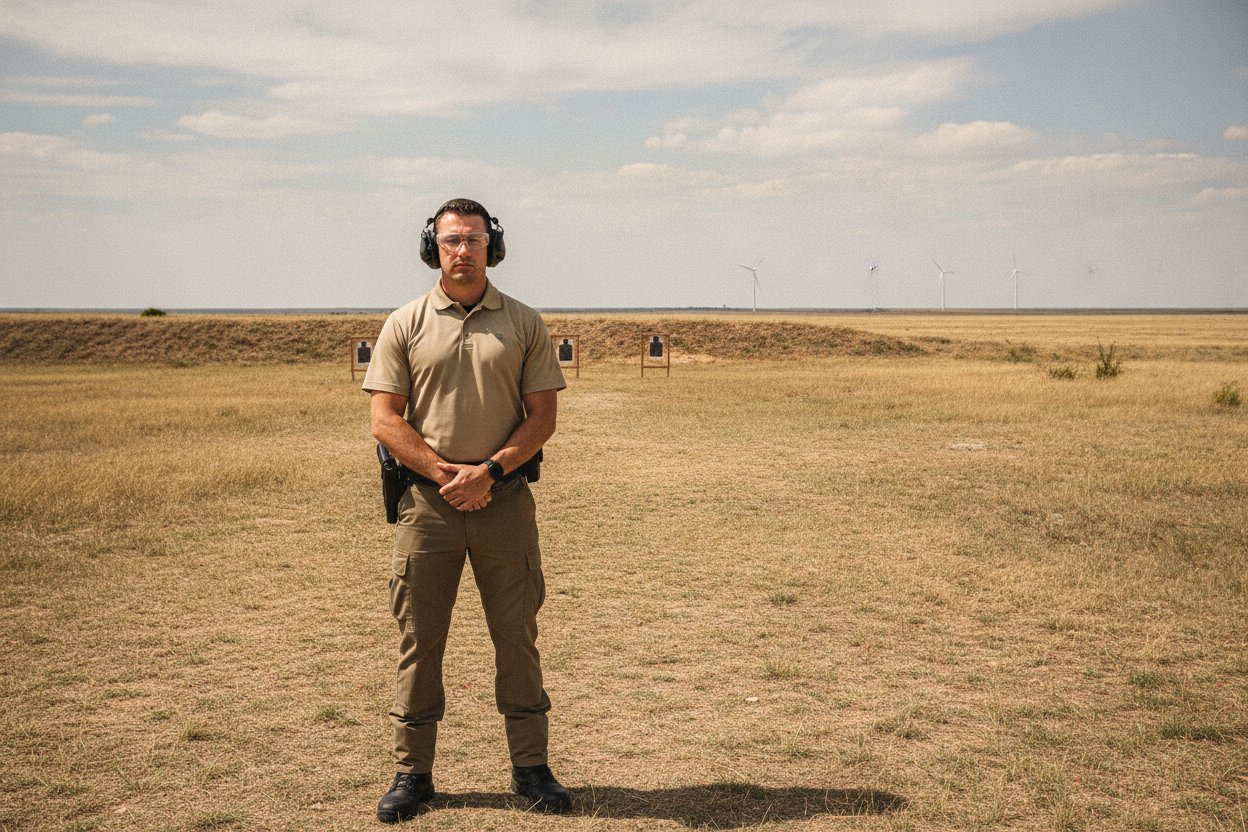
Start with the text everyone is arguing about. §35.161(g) requires commissioned security officers and personal protection officers to complete six hours of continuing education, satisfied by completing the renewal portions of the Level III or Level IV training course, as applicable, and all of it taught by department-approved training schools and instructors. A commissioned security officer must also submit a firearms proficiency certificate with the renewal application. That is the whole requirement. Now the three readers.
Reader: The Officer Who Is Ahead of the Date
Your only real risk is doing the hours too early. §35.161(n) makes continuing education valid only if completed within the two-year period preceding the license’s current expiration date. Note the shape of that: it is a window measured backward from your expiration date, not an instruction to take a class every two years. Hours earned outside the window do not count toward the renewal in front of you, however good the class was. At the same time §35.161(a) says a renewal application may not be submitted until the required minimum hours are earned, so there is no getting ahead of it by filing early either.
Reader: The Officer Whose Commission Went Quiet
The dividing line is three years. §35.141(d) provides that a person who is inactive or expired and has not been employed in the industry for three years or more must submit current training certificates to the department. Past that point a six-hour refresher is usually the wrong product and the full Level 3 commissioned security officer course is what puts you back on a post. Under it, the renewal course is still the right route. Ask before you buy; it costs nothing to ask and a lot to guess wrong.
One important carve-out for anyone who has served: §35.182 gives military service members two additional years to complete continuing education or any other renewal-related requirement, and §35.181 waives late-renewal penalty fees for service members. Between Reese-era veterans still in the area and a steady stream of Guard and reserve service on the South Plains, this comes up here more than it does in most Texas markets.
Reader: The Supervisor Watching a Roster of Expiration Dates
If you schedule officers rather than stand posts yourself, two things should be on your wall. First, §35.162(d): the in-house continuing education exemption available to companies with ten or more licensed employees does not apply to commissioned security officers or personal protection officers. Second, §35.162(f): credits earned through outside entities may not be used to satisfy their requirement. Together they mean you cannot cover your armed roster with an internal training day or a generic online CE vendor. Those hours come from an approved school, full stop.
Records split in two directions, which is where officers who transfer between companies get caught. §35.161(a) makes the employer responsible for maintaining proof in the employee’s personnel file while the licensee indicates completion on the renewal application. §35.161(m) makes the attendee keep certificates of completion for two years and furnish copies to the department on request. If an officer arrives from another company, the file does not arrive with them. Their personal copy is what you will actually be able to see.
Who Does Not Belong on Any of Those Lists
Unarmed staff. §35.161(b) specifically exempts noncommissioned security officers from continuing education, so a Level 2 officer does not owe these hours. And keep the two armed credentials distinct: Level 3 is the commissioned security officer; Level 4 is the personal protection officer, a separate bodyguard credential rather than a senior grade of Level 3. Each renews through the renewal portion of its own course.
What Happens in What Order
- Check your expiration date and confirm you are inside the §35.161(n) two-year window.
- Complete the six-hour renewal course. Ours runs 100% online: which matters on the South Plains, where the alternative is often hours of driving across flat country to reach an approved classroom.
- Schedule the in-person firearms qualification separately. It is not included in the online course price, which covers online training only.
- Collect your certificate of completion, referred to on our site as PSP 31. Per §35.162(b)(3) it shows your name and license number, date of attendance, hours, and courses attended, signed and dated by the school director.
- Keep your copy for two years. If you qualify with a shotgun, note §35.146(b): a biennial familiarization of six rounds of “00” buckshot in connection with renewal of a commissioned security officer.
Armed posts around Lubbock cover a lot of ground. The university and medical district, agricultural processing and grain facilities out past the loop, energy and wind-farm support operations, and the warehousing that serves a region far larger than the city itself. The credential travels across all of it, and so does the obligation. The rules are public in 37 TAC Chapter 35, licensing is handled by the Texas DPS Private Security Bureau, and if your case is not one of the three above, our FAQ and class list are the next stop.
Leave a Reply