
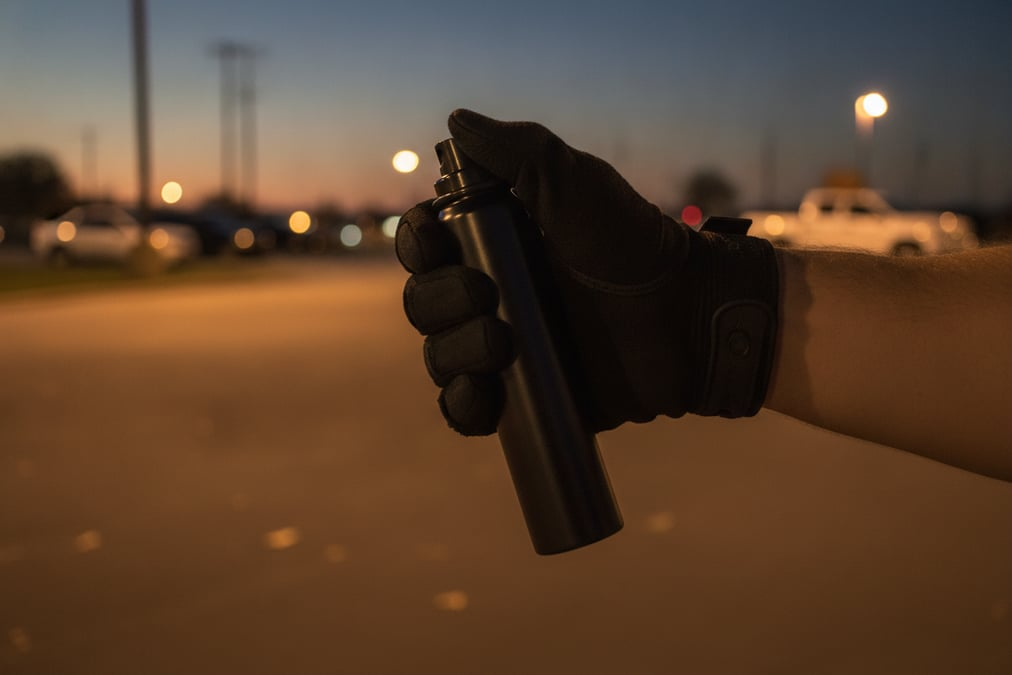
OC spray, usually just called pepper spray, is one of the most common tools carried on a Texas security officer’s duty belt. It is small, it is quick to reach, and it gives an officer an option between talking and going hands on. That is exactly why training matters. A canister that is easy to draw is also easy to use at the wrong moment, at the wrong distance, or on the wrong person, and the officer carrying it is the one who has to explain the decision afterward.
Employers and the clients they contract with expect an officer who carries OC to have training on it that can be documented. When a site supervisor, an account manager, or an insurance carrier asks what training an officer has on the spray he is wearing, “I read the label” is not an answer anyone accepts. A certificate from a completed course is. That is the practical reason people search for an OC pepper spray class near them, and it is the reason East Texas Security Training Academy teaches one.
You must complete Level 3 first
Before anything else, know this, because it decides whether you can take the class at all. Texas DPS states that the pepper spray training was approved as a supplement to the Level III training curricula and is “therefore approved only for those who have successfully completed the Level III training.” DPS explains the reasoning as well: the defensive tactics and use of force components of Level 3 provide the background training necessary to ensure the officer’s use of the device is safe, appropriate, and authorized.
So the order is fixed. Level 3 first, then OC. If you have already completed Level 3, you do not repeat it to add the pepper spray certificate. If you have not, start there and come back. If you are not sure where you stand, ask us before you pay for anything.
Who usually takes this class
Most students fall into one of a few groups.
- Commissioned officers whose post orders authorize OC and whose company wants documented training on file for every officer who carries it.
- Officers who work sites where an intermediate option matters, such as hospitals, schools, retail, and residential properties.
- Officers adding to a résumé. Contract security is competitive, and a candidate who already holds the certificate is cheaper for a company to put on a post.
- Supervisors and account managers who need to understand the tool well enough to write policy about it and review reports involving it.
What the training actually covers
The course is shorter than Level 3, but it is not thin. It works through the tool from four directions.
Use of force considerations. OC is an intermediate weapon. It sits in the same part of the force continuum as a baton or an electronic control device, above empty hand control and well below deadly force. The class covers where OC fits, what level of resistance justifies reaching for it, and what does not. A subject who is walking away, arguing, or recording you on a phone is not a subject you spray. The class also covers the liability that comes with getting this wrong, including punitive use, excessive dosage, and spraying a compliant person.
The agent itself. What oleoresin capsicum is, what it does to the eyes, airway, and coordination, and why the reaction varies so much from one person to the next. Some people are functionally shut down by a half second burst. Others keep fighting. An officer who expects a guaranteed result is an officer who gets surprised.
Deployment. Carry and ready positions, verbal warning before spraying when it is tactically safe to give one, target area, burst length, spray patterns, and distance. Distance gets its own attention because both ends of the range cause problems. Too close risks eye injury and cross contamination of the officer. Too far and the spray never reaches the subject while the officer stands there thinking the problem is solved.
Decontamination and aftercare. This is the part officers skip and then regret. Once a subject is no longer combative, the officer’s job shifts to getting that person recovered and monitored. Fresh air, cool water, removing contaminated clothing, and keeping hands away from creams and ointments that trap the agent against the skin. The class also covers ongoing monitoring, the pre-existing medical conditions that raise the risk of a bad outcome, the warning signs that call for EMS immediately, and documenting what you did in your report.
How ETXSTA splits the course into two parts
Part 1 is online and self-paced. It carries the classroom material: the force considerations, the properties of the agent, the deployment principles, the decontamination protocol, and the medical and liability content. You can work through it at home, on a night off, or across several short sessions. Start it from the online OC certification page.
Part 2 is in person, with an instructor, and it is where the handling happens. Drawing from a real carrier, presentation, spray patterns against a target, and the practical side of decontamination that you cannot rehearse through a screen.
The in-person part is scheduled separately
Enrolling in Part 1 does not reserve you a seat in Part 2. The in-person session runs on its own calendar, and you schedule it with us once the online portion is done or well underway. Check current dates on the class schedule. If you have a deadline from an employer, tell us the date when you book so we can point you at a session that gets your certificate issued in time.
Once both parts are complete, a pepper spray certificate is issued to you, separate from your Level 3 certificate. Keep your own copy. Your employer will want one for your personnel file, and a future employer will ask for it. Common questions about enrollment, timing, and records are answered on our FAQ page.
Leave a Reply