Texas Level IV Personal Protection Officer (PPO) Class — In Person
The endorsement Texas requires to work armed executive protection. Close protection, not patrol.
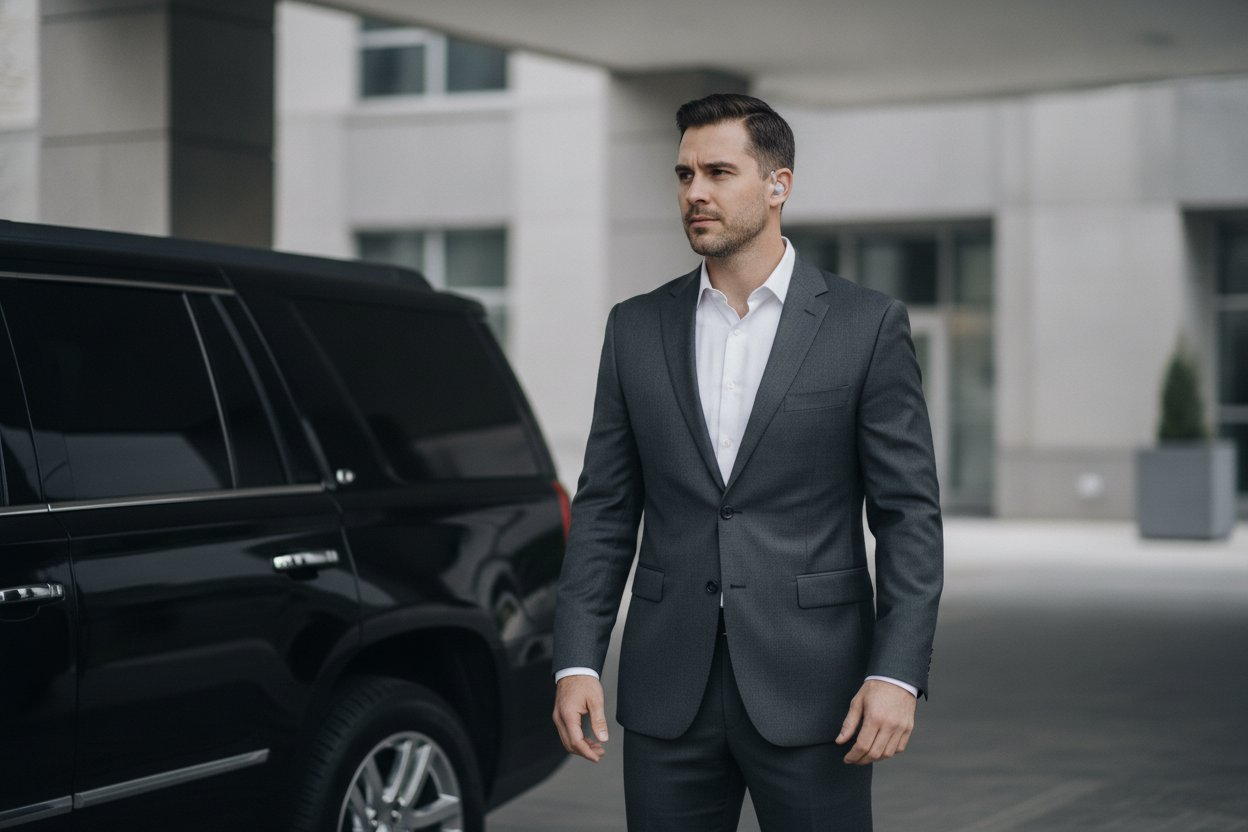
A Personal Protection Officer is defined in Texas Occupations Code §1702.202 as someone who carries a firearm and provides protection from bodily harm to another individual. That is a different job from guarding a building, and Texas treats it as a separate endorsement with its own requirements.
Level IV is not "Level III, but higher"
This is the single most common mistake in Texas security training, and plenty of schools get it wrong on their own websites. Level III is what a Security Officer Commission requires — armed security work generally. Level IV is not a senior grade of that. It is the Personal Protection Officer course, a specialisation in protecting a person rather than a place, and it sits on top of your Level III training rather than replacing it.
What you need before you can hold the endorsement
Per 37 TAC §35.91 and Texas Occupations Code §1702.204, a PPO endorsement requires all of the following:
- You must be at least 21. Not 18 — this one catches people out.
- Level III training and a commission. You hold, or apply concurrently for, a PPO commission.
- Completion of this course from a DPS-approved PPO instructor.
- The course itself is 15 hours. Under 37 TAC §35.141(a)(3) the Level IV course is a minimum of fifteen classroom hours, and Texas Occupations Code §1702.205 describes it as a 15-hour course in nonlethal self-defense or defense of a third person — additional to the basic training course for security officers, not additional to some separate PPO course. §1702.205 also requires it to be delivered in person.
- A psychological evaluation. You must submit results of the Minnesota Multiphasic Personality Inventory (MMPI) or an equivalent, via a signed Declaration of Psychological and Emotional Health from a licensed psychologist. Budget time and money for this separately — it is arranged with a psychologist, not with us.
- Employment by a licensed investigations or guard company.
How a PPO may carry — read this carefully
§1702.206 limits PPO carry authority in ways that surprise people:
- You may carry only while on duty for the employer under whom the endorsement was issued, or travelling directly to and from an assignment.
- You must carry your commission and endorsement and present them on request.
- If you are in uniform, the firearm must be carried openly and visibly.
- If you are not in uniform — the suit-and-earpiece work most people picture — it must be carried concealed, regardless of any other open-carry authority you may hold personally.
What the course covers
Protection strategy — building a client profile, running site surveys, establishing contacts with property owners and local law enforcement, and controlling information exposure: schedule, travel plans, address, family, social media. Layered protection across an outer, middle and inner perimeter, and why a standoff of 30 feet or more from an unarmed threat is the working minimum.
The four options when a client is threatened — escape and evasion, submission and passive resistance, active resistance, and weapons. Getting the client out is usually the win. The suit is not the job; the decision-making is.
Use of force — the five force options through the Dynamic Resistance Response Model, framed for protection work. Note that under the PPO framing, non-threatening resistance does not authorise baton use — only pressure points, control holds and takedowns.
Defensive tactics, hands-on and the largest part of the day — the field-interview ready stance; strikes including close-quarter elbow, forearm and knee; kicks; pressure points; elbow and outside-leg takedowns; defending against high, mid and low tackles including the sprawl; escapes from front and rear chokes; ground defence from guard, mount and side-mount, using shrimping and crabbing to create distance; and weapon retention if someone reaches for your holstered firearm.
Price: $250 — in person
This is a fifteen-hour, in-person course and seats are limited to 15 per session. The price covers the course only — your MMPI evaluation and the Texas DPS commission and endorsement fees are separate and are paid to the psychologist and the state respectively.
Level IV is also included in the Security Career Fastrack, which bundles the whole path from Level II through PPO.
Common questions
Do I need Level III first?
Yes. Level III training is required for personal protection officers under 37 TAC §35.141(a)(2), and you will need a commission alongside the endorsement. If you have not done it, start with Level III Part 1.
What is the MMPI and do I really have to take it?
The Minnesota Multiphasic Personality Inventory is a standardised psychological assessment. Yes — §35.91 requires it, or an approved equivalent, with a signed Declaration of Psychological and Emotional Health from a licensed psychologist. You arrange it yourself and it is not included in the course price.
Can I work as a bodyguard for whoever hires me?
No. Your carry authority under §1702.206 is tied to the employer under whom the endorsement was issued. If you change employers the endorsement has to transfer, which is a form and a fee, generally within 14 days of the commission transfer.
Can I carry concealed in a suit?
Not just permitted — required. Out of uniform, a PPO must carry concealed. In uniform, the firearm must be carried openly. It is the opposite of what most people assume.
Is this class physical?
Yes. A large share of the day is hands-on defensive tactics — strikes, takedowns, takedown defence, ground escapes and weapon retention. Come in clothing you can move and take falls in.
More questions? See the full FAQ or browse all ETXSTA courses.