
The conversation usually starts the same way in The Woodlands: an officer has been running unarmed posts for a year or two, a supervisor mentions that the armed assignments pay differently, and nobody quite explains what stands between the two.
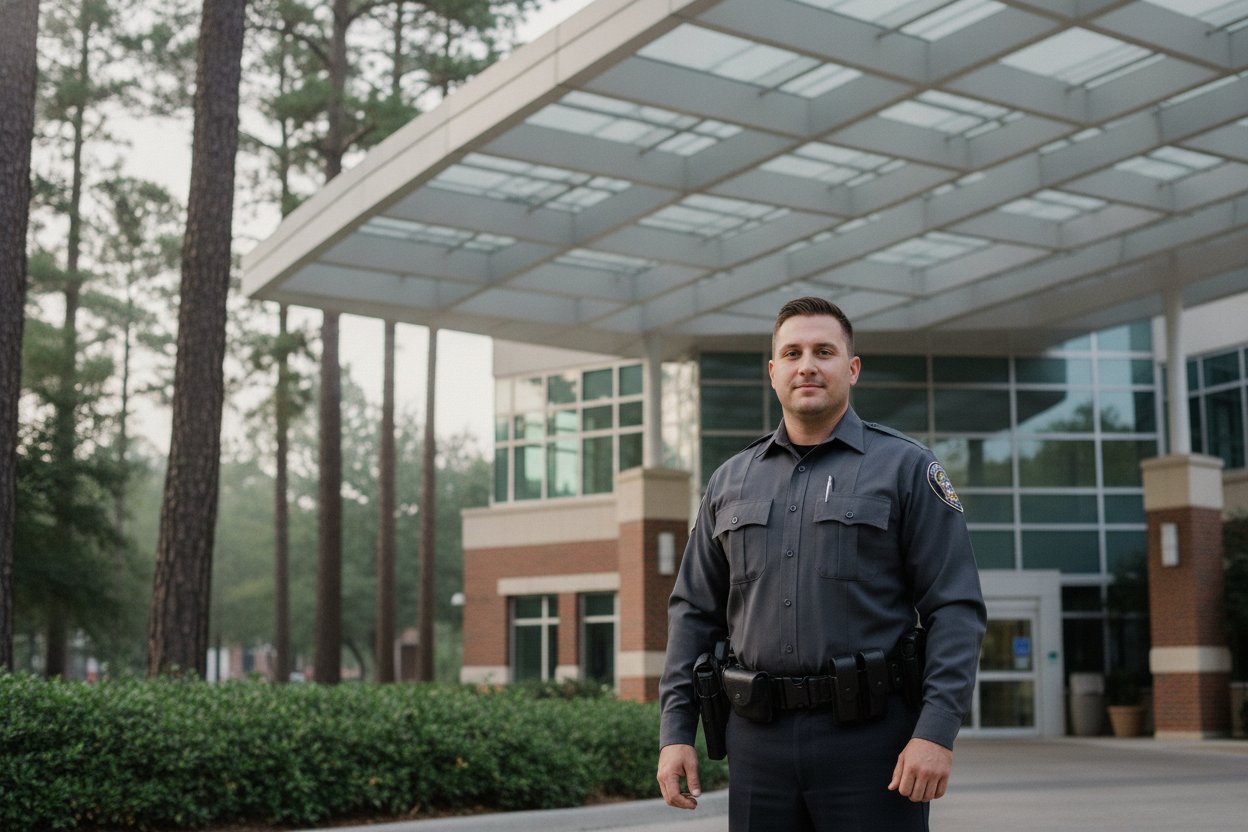
What stands between them is a course and a commission. Under 37 TAC §35.141(a)(2), the Level 3 training course is required for anyone seeking a security officer commission, the credential that permits an officer to carry a firearm on duty, and for personal protection officers. Finishing Level 3 is not itself the commission; the commission is issued by DPS when you apply. Level 3 is the training the application rests on.
Your Level 2 Certificate Is Still Doing Work
A common assumption is that Level 3 supersedes what came before it. It doesn’t. §35.81(a) requires the commission application to include copies of both the Level 2 and the Level 3 certificates of completion, plus the other items the department lists. So if your Level 2 certificate is in a box somewhere or was only ever handled by a previous employer, track it down before you start Part 1 rather than after you have finished everything else.
Two Parts, Booked Two Different Ways
Level 3 splits cleanly. Part 1 is the classroom half: the law governing armed security work, use of force, the duties that attach to holding a commission, and the written exam. East Texas Security Training Academy delivers that part 100% online, which is the half you can do at home between shifts. Part 2 is in person and covers defensive tactics, firearms handling, and a firearms proficiency exam.
Be honest with yourself about the second half when you plan. The online course price covers the online training only; the in-person firearms qualification is scheduled separately and is not included. There is no firearms component hidden inside the online portion, and finishing Part 1 does not put a gun on your hip. Treat the range day as a second appointment you still have to make.
The Exam Bar Is 75%
§35.144(c) sets the minimum passing grade on Level 3 and Level 4 school examinations at 75%. That is deliberately higher than the written threshold on a Texas License to Carry, which is the comparison most students bring with them. Officers who already hold an LTC sometimes arrive expecting the same experience and find the material heavier on statute and on the duties that attach to being commissioned.
The shooting is where the LTC comparison does hold. The firearms proficiency exam is close to identical in format to the LTC proficiency exam, and under §35.145 the qualification may use the DPS Primary Issued Handgun Qualification Course or the DPS Approved LTC Course. §35.146 separately sets out a shotgun course of fire for commissioned security officers, so qualifying with a shotgun alongside a handgun is available if the post you are aiming at wants it. The full chapter is public reading at 37 TAC Chapter 35.
Why Your Employer Can’t Just Run It For You
Level 2 can be delivered in-house by a licensed company’s own designee. Level 3 cannot. The course material is prepared by and obtained from DPS, and the course may only be taught by a DPS-approved school using a DPS-approved instructor. That single restriction is why the armed step is a genuine external step rather than something a contract company can absorb into onboarding. The Texas DPS Private Security Bureau administers the licensing side of all of it.
Don’t Buy Level 4 By Mistake
Level 4 is the personal protection officer course, the bodyguard credential, with a minimum of fifteen classroom hours under §35.141(a)(3). It is a different course for a different job, not the next rung above Level 3. If what you want is to work an armed security post, Level 3 is the one. If you are genuinely headed toward close protection, that is a separate conversation and a separate enrollment; the class list keeps them clearly apart.
What The Woodlands Market Looks Like
The Woodlands is unusual for a Texas security market in how concentrated its commissioned work is. It is a master-planned community with a dense corporate office core, a large medical and hospital district, energy company campuses, upscale retail, a busy events and performance venue scene, and gated residential neighborhoods. Almost all of it the category of client that specifies a commissioned officer rather than a non-commissioned one. Officers here also sit close enough to the wider Houston and Conroe corridor that a commission travels well when you change contracts.
When you qualify, §35.147 requires the approved school to issue your original certificate of completion, the PSP 30, within seven days, and to retain training records for 24 months. Keep your copy somewhere sensible; you will want it again, both for the commission application and later when the renewal course comes due to keep the commission current. Questions that don’t fit any of the above are usually answered on the FAQ page.
Leave a Reply