
You already hold a Level 2 certificate and you’re working posts around Round Rock. The listings you actually want, the ones that say commissioned, are a separate credential, and this is the order you have to do things in to get there.
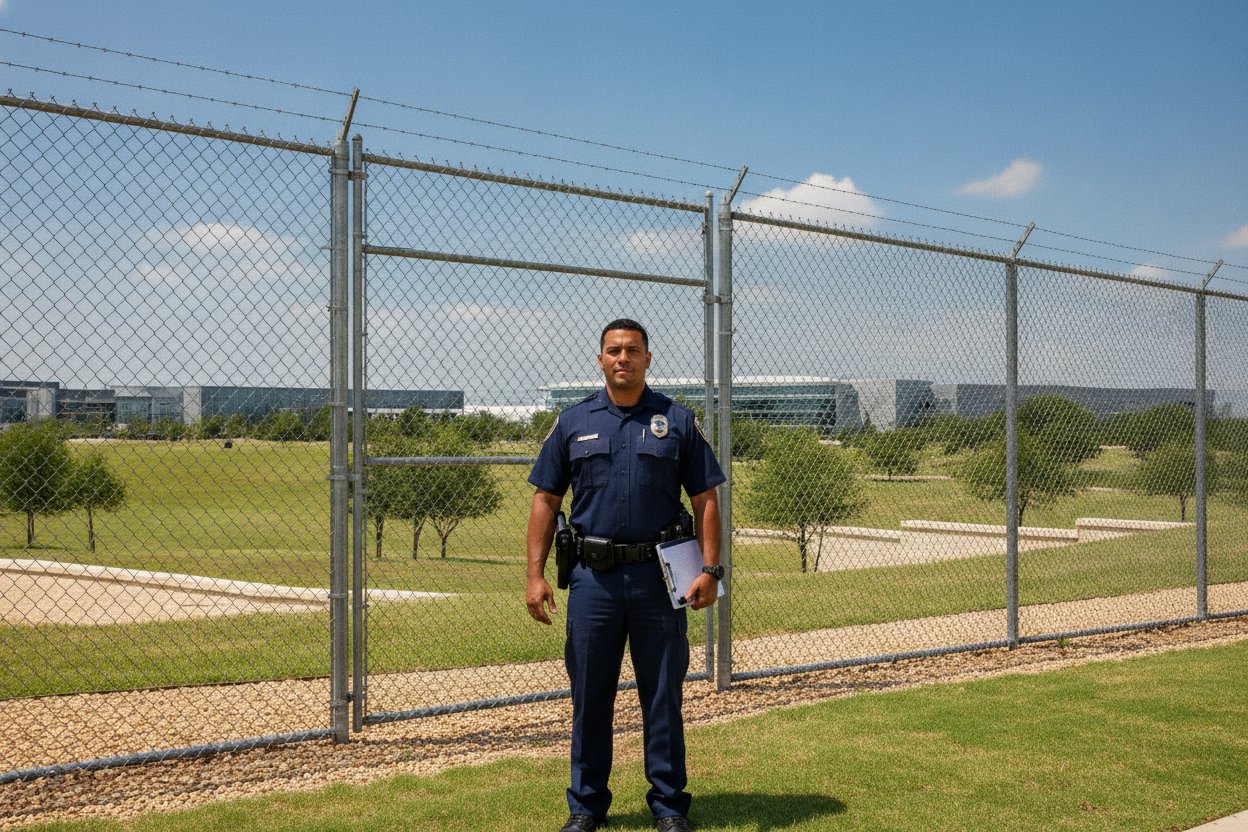
What Actually Changes When You Go Commissioned
Non-commissioned and commissioned are two different things in Texas, not two grades of one license. Under 37 TAC §35.141(a)(2), the Level 3 training course is what’s required of anyone seeking a security officer commission, the credential that allows an officer to carry a firearm on duty, and of personal protection officers as well. Your Level 2 training does not go away and is not replaced. You keep it, and Level 3 sits on top of it.
That is not a throwaway detail. §35.81(a) says the application for a security officer commission requires copies of both the Level 2 and the Level 3 certificates of completion, along with the other items DPS lists. Officers who let the Level 2 paperwork go missing years ago are the ones who get stuck at the application stage.
The Sequence, In Order
- Hold your Level 2 certificate of completion and be able to produce a copy of it.
- Complete Level 3 Part 1: the classroom material, delivered online here: the law governing armed security work, use of force, the duties that attach to a commission, and the written exam.
- Pass that written exam at 75% or better.
- Book and attend Part 2 in person: defensive tactics, firearms handling, and the firearms proficiency exam. This is a separate scheduling step and a separate booking.
- Receive your Level 3 certificate of completion, the PSP 30, and file the commission application with DPS with both certificates attached.
Be clear-eyed about step four. The online course price covers the online training only. The in-person firearms qualification is scheduled separately and is not included, and nothing in the online portion involves firearms work. People occasionally finish Part 1, assume they are done, and are surprised. Plan the range day as its own commitment from the start.
Seventy-Five Percent, Not Seventy
Under §35.144(c), the minimum passing grade on Level 3 and Level 4 school examinations is 75%. That is a higher bar than the written threshold on a Texas License to Carry, and it catches people who breezed through the LTC test and assumed this would feel the same. Read the material properly rather than skimming for the test.
The shooting half will feel more familiar. The firearms proficiency exam is close to identical in format to the License to Carry proficiency exam, and under §35.145 the qualification may use the DPS Primary Issued Handgun Qualification Course or the DPS Approved LTC Course. §35.146 also lays out a shotgun course of fire for commissioned security officers, so qualifying with a shotgun in addition to a handgun is an option if your post calls for it. You can read the chapter yourself in 37 TAC Chapter 35.
Level 3 Is Not Level 4
Worth saying plainly because job postings blur it constantly. Level 3 is the commissioned security officer. Level 4 is the personal protection officer, the bodyguard credential, which is a separate course with a minimum of fifteen classroom hours under §35.141(a)(3). Level 4 is not a general “advanced commissioned” tier you graduate into. If the armed post you want is a standing security assignment, Level 3 is the course you need.
Who Is Allowed to Teach This
Here is the biggest practical difference from Level 2. Course material for Level 3 is prepared by and obtained from DPS, and the course may only be taught by a DPS-approved school using a DPS-approved instructor. A licensed company cannot put its own designee in front of the class for Level 3 the way it can for Level 2. If your employer offers to handle it in-house, that is not a route that exists. Licensing itself runs through the Texas DPS Private Security Bureau.
The Armed Work Around Round Rock
Round Rock sits on the north edge of the Austin metro along the I‑35 corridor, and the mix of work here reflects that: corporate and technology campuses, data center and critical-facility perimeters, hospital and medical-district contracts, bank and credit union branches, and a heavy run of distribution and logistics space stretching up toward Georgetown and back down toward Pflugerville. A lot of that is exactly the category where a client asks for a commissioned officer rather than a non-commissioned one.
The other Round Rock-specific advantage is that Part 1 being 100% online means you are not burning days off driving into a classroom somewhere in the metro before your shift. You work the classroom material around your rotation and then reserve one block of time for the range.
Paperwork, and What Comes After
- Under §35.147, an approved school issues the original certificate of completion to a qualifying student within seven days of qualifying.
- The same rule requires the school to retain training records for 24 months.
- The certificate is referred to as the PSP 30.
- Keep it, and keep your Level 2 certificate with it. §35.81(a) wants both.
Once you are commissioned, the credential has to be kept current, and that is what the armed security renewal course handles further down the line. For now, the step in front of you is Part 1. If anything above doesn’t quite match your situation, a lapse, an out-of-state background, a question about which class to buy, check the FAQ page or look over the full list of classes before you enrol.
Leave a Reply