
Level 3 is the step that changes what kind of post you can hold. For a Brownsville officer working unarmed today, it is the difference between a narrow slice of the local market and most of it.
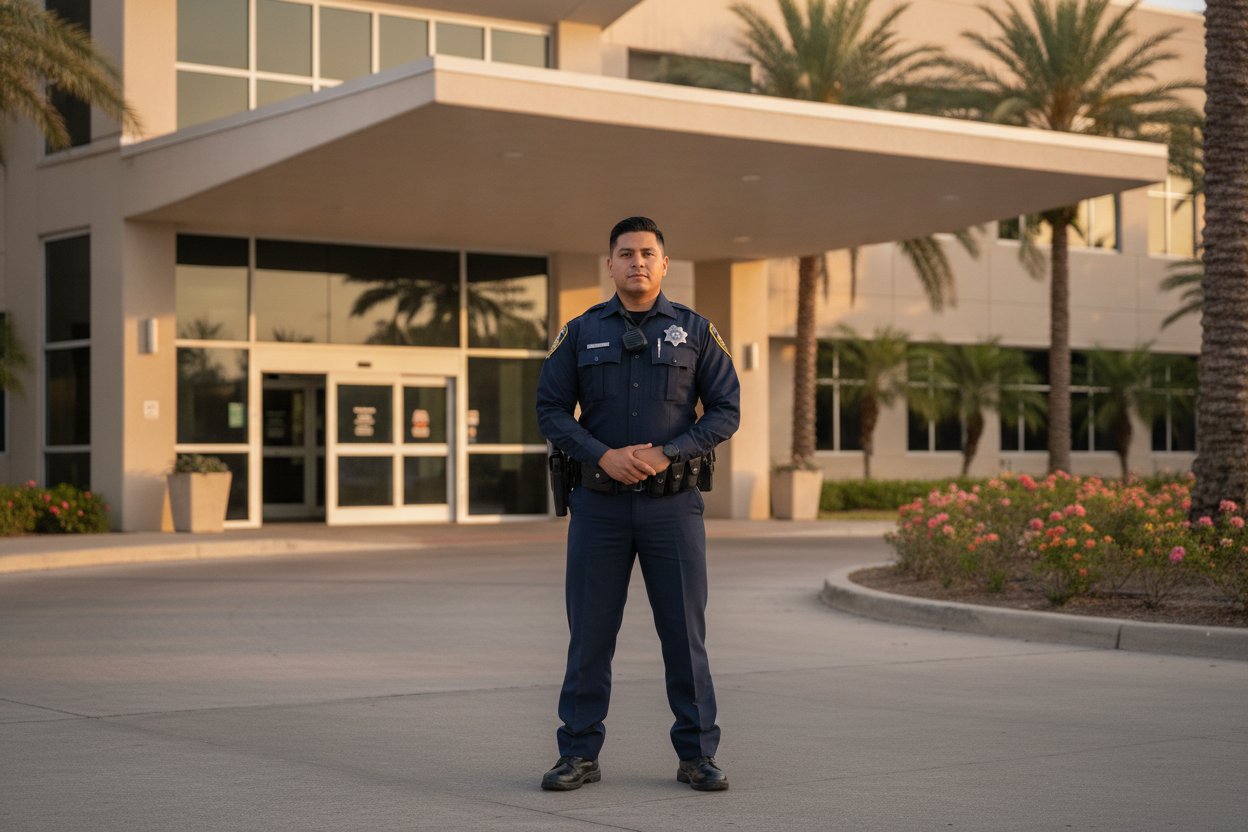
How the Course Is Built
Level 3 is not delivered as one continuous class. Part 1 is the classroom portion and it is online: the law governing armed security work, use of force, the duties that come with holding a commission, and the written exam. Part 2 is in person, covering defensive tactics, firearms handling and a firearms proficiency exam. ETXSTA teaches Part 1 100% online; the online course price covers the online training only, and the in-person firearms qualification is scheduled separately and is not included.
If you are already on a roster, that separation is the part that makes this workable. Officers on the far southern coast are a long way from most of the state, and the armed work around Brownsville, the medical district, the port and its terminal and logistics operations, the manufacturing and cross-border warehouse corridors, campus and municipal contracts, is covered in rotations rather than office hours. Doing the classroom half on your own clock means no supervisor has to release you for a block of consecutive weekdays, and the only date that has to be coordinated is the in-person one.
Where Level 3 Sits in the Progression
The Level 2 course is the entry point and it stays relevant. You keep that certificate, and you will need it again later. Level 3 is the armed step. Under 37 TAC §35.141(a)(2), it is required for anyone seeking a security officer commission, the credential that allows an officer to carry a firearm on duty, and for personal protection officers. Afterward, the armed security renewal course is what keeps a commission current.
One boundary to hold firmly: Level 3 is not Level 4. Level 3 produces the commissioned security officer. Level 4 is the personal protection officer course, the bodyguard credential, a separate class with a minimum of fifteen classroom hours under §35.141(a)(3). It is not an advanced version of a commission, and enrolling in it will not get you onto an armed post.
Who can teach it
Level 3 course material is prepared by and obtained from DPS, and the course may only be taught by a DPS-approved school using a DPS-approved instructor. That is a genuine departure from Level 2, where a licensed company may use its own designee to deliver training in house. No employer, however large, can run your Level 3 internally.
The Standards You Are Measured Against
- Written: the minimum passing grade on Level 3 and Level 4 school examinations is 75% under §35.144(c). Above the written standard for a License to Carry, which is worth knowing before you decide how much studying the material deserves.
- Handgun: the firearms proficiency exam is close to identical in format to the Texas LTC proficiency exam. Under §35.145 the qualification may use the DPS Primary Issued Handgun Qualification Course or the DPS Approved LTC Course.
- Shotgun, optional: §35.146 sets out a shotgun course of fire for commissioned security officers, so you can choose to qualify with a shotgun in addition to a handgun.
What Happens After You Qualify
You receive a certificate of completion, referred to here as PSP 30. Under §35.147, an approved school issues the original certificate to a qualifying student within seven days of qualifying and retains training records for 24 months. The commission itself still has to be applied for: §35.81(a) requires the application for a security officer commission to include copies of both the Level 2 and the Level 3 certificates of completion, along with the other items the department lists. That is why the Level 2 paperwork from the beginning of your career is worth filing somewhere you can find it.
The rules quoted throughout are available in 37 TAC Chapter 35, and the commission application process belongs to the Texas DPS Private Security Bureau. If your circumstances are unusual, a lapse, a move from another state, an old certificate you are not sure still counts, check our FAQ page before you enroll, so you buy the right class the first time.
Leave a Reply