The first thing an Abilene officer should understand about Level 3 is that it is not one class. It is two halves that happen at different times, in different places, and only one of them can be done from your kitchen table.
Part 1 and Part 2 — What Each Half Actually Is
Part 1 is the classroom material, and it runs online. It is the law governing armed security work, use of force, the duties that attach to a commission, and the written examination that closes it out. Part 2 happens in person and covers defensive tactics, firearms handling, and a firearms proficiency exam. Nothing in the online half involves a firearm in your hands — that is entirely the in-person half’s job.
East Texas Security Training Academy delivers Part 1 100% online. Two things follow from that, and both matter for budgeting your time and money. The online course price covers the online training only, and the in-person firearms qualification is scheduled separately and is not included. So the honest way to plan this is as two commitments, not one purchase.
Why the Split Helps Somebody Already Working Shifts
If you are already posted somewhere in the Big Country, your schedule probably rotates, and it probably does not rotate around a training calendar. The old model asked you to surrender consecutive weekdays to a classroom before you ever touched the range portion. Splitting the course means the reading, the law and the written exam get done in the gaps — after a night shift, on a day off, in whatever order your week allows — and the only thing you have to physically schedule around is the in-person half.
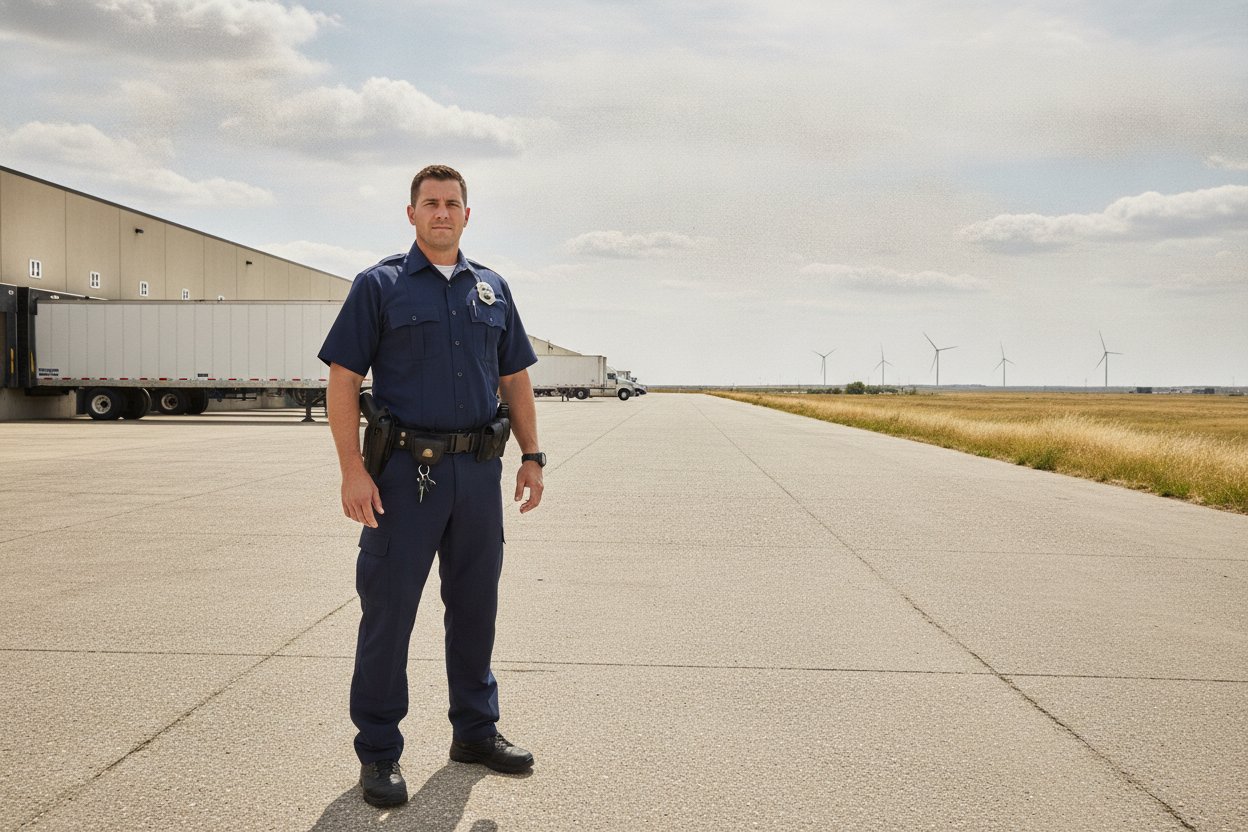
That is worth something in Abilene specifically. Armed posts here tend to cluster around the medical district, the university campuses, wind-energy and oilfield service yards, and the distribution operations strung along the I‑20 corridor — and officers working those sites are frequently covering a rotation that does not pause for a week of classroom. Abilene also sits far enough from the big metros that a traditional in-person Level 3 has historically meant a long drive on top of the class itself.
Who the Course Is Required For
Under 37 TAC §35.141(a)(2), the Level 3 training course is required for anyone seeking a security officer commission — the credential that allows an officer to carry a firearm on duty — and for personal protection officers. Worth saying plainly, because job postings blur it constantly: Level 3 is not Level 4. Level 3 is the commissioned security officer. Level 4 is the personal protection officer, the bodyguard credential, a separate course with a minimum of fifteen classroom hours under §35.141(a)(3). They are not two rungs of one ladder.
Level 3 also cannot be taught by just anyone. The course material is prepared by and obtained from DPS, and it may only be delivered by a DPS-approved school using a DPS-approved instructor. That is a real difference from the Level 2 course, where a licensed company can use its own designee in house. For Level 3 there is no in-house shortcut.
The Exams — Both of Them
- The written school examination has a minimum passing grade of 75% under §35.144(c). That threshold is higher than the written test standard for a License to Carry, so treat the material as something to study rather than skim.
- The firearms proficiency exam in Part 2 is close to identical in format to the Texas License to Carry proficiency exam. Under §35.145 the qualification may use the DPS Primary Issued Handgun Qualification Course or the DPS Approved LTC Course.
- §35.146 sets out a shotgun course of fire for commissioned security officers, so you have the option to qualify with a shotgun in addition to a handgun.
Finishing the Course Is Not the Same as Holding the Commission
The commission itself is issued by DPS on application, not by the school. Under §35.81(a), that application requires copies of both your Level 2 and your Level 3 certificates of completion, along with the other items the department lists — which is exactly why the Level 2 certificate you earned to start working unarmed is a document you keep, not one you retire. The certificate of completion is referred to on this site as PSP 30.
On the paperwork side, §35.147 requires an approved school to issue the original certificate of completion to a qualifying student within seven days of qualifying, and to retain training records for 24 months. After that, keeping a commission current is the job of the armed security renewal course — Level 2, then Level 3, then renewal is the actual sequence of a Texas armed security career.
You can read the governing rules yourself in 37 TAC Chapter 35, and licensing questions belong with the Texas DPS Private Security Bureau. If you are still working out which class you actually need, our FAQ page covers the situations that come up most.
Leave a Reply