
Before anyone in Marshall asks what the Level 2 class costs or how fast it goes, the better question is what is actually in it. Four subject areas: and every one of them is there because something went wrong somewhere without it.
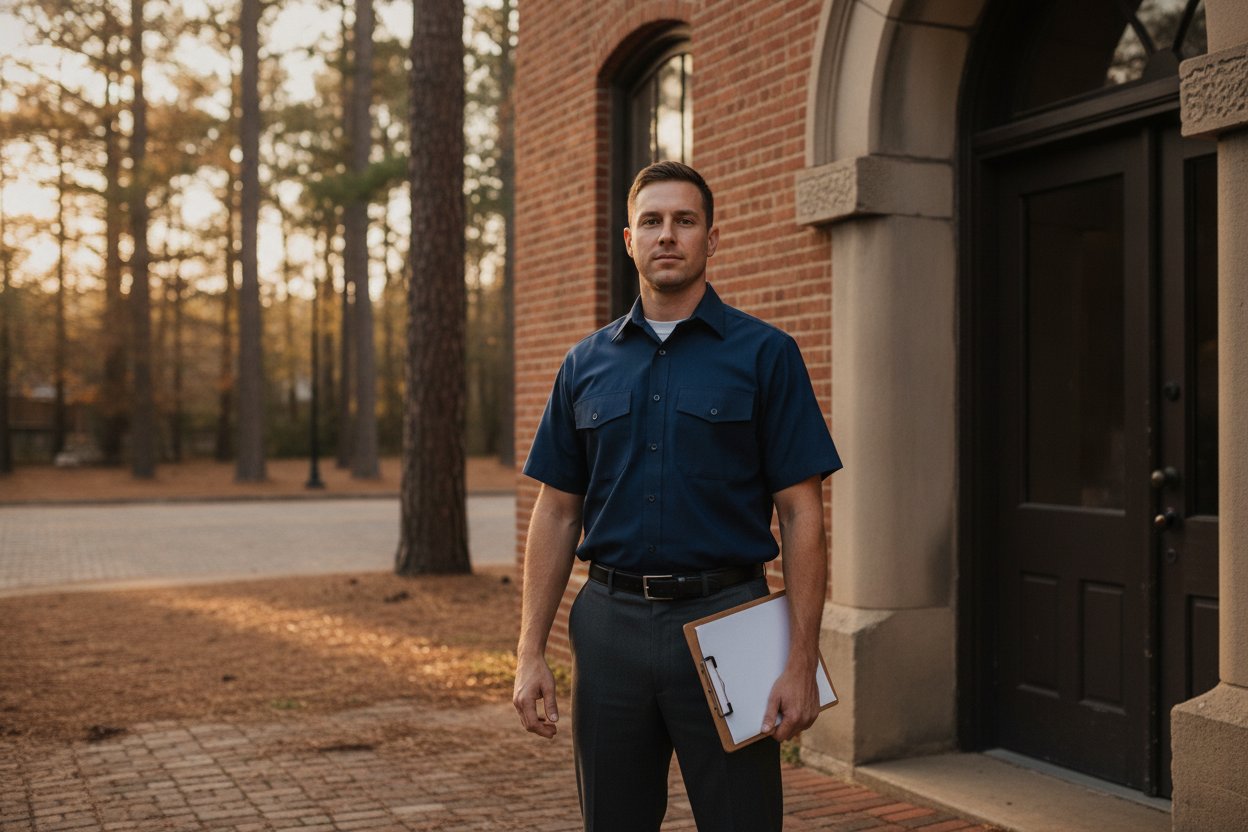
Texas Security Law: Knowing Where Your Authority Stops
The first block of the course is Texas security law, and it exists for a reason that becomes obvious the first week you work a post. A licensed security officer is a private citizen with a job, not a peace officer. The law defines what you may do, what you may only observe and report, and where the line sits between the two. New officers most often get themselves and their employers into trouble on exactly that line, not through bad intent, but because nobody ever told them precisely where it was drawn.
The course material itself is prepared or approved by the Texas Department of Public Safety, which is why the content does not vary from school to school in the way people expect. The rules governing it sit in 37 TAC Chapter 35 if you want to read the source yourself.
The Professional Responsibilities of the Role
The second block covers the professional responsibilities of a security officer. The everyday substance of the job rather than the dramatic parts. Observation and accurate reporting. Access control and who is actually supposed to be where. Deterrence, which is most of what a uniformed officer accomplishes on an ordinary shift. How you carry yourself when someone is angry at you for doing your job correctly. It is the unglamorous half of the curriculum and the half that determines whether a client renews a contract.
Emergency Procedures and Ethics
Emergency procedures is the third block. Fires, medical incidents, evacuations, severe weather. The situations where an officer is the first person on scene and the only one wearing a uniform, which means people will look to you whether or not you feel ready. The point of the training is to replace improvisation with a sequence you already know.
The fourth block is ethics, and it is not filler. Security officers are routinely handed keys, badge access, camera systems, delivery manifests and after-hours run of a building. That trust is the product being sold. Ethics instruction is where the course deals with conflicts of interest, favoritism, accepting things you should not accept, and the quiet decisions nobody would ever find out about.
What Level 2 Is Not
Notice what is absent from that list. There is no firearms training and no firearms qualification anywhere in Level 2. It is the entry-level, unarmed course, and finishing it does not by itself let you carry a weapon on duty. If carrying is the goal, Level 2 is step one and the Level 3 commissioned officer course is what a security officer commission actually requires. Once you are commissioned, the armed security renewal course is what keeps that commission current.
Now the Licensing Mechanics
Under §35.141(a)(1), Level 2 must be completed by anyone applying for a non-commissioned security officer license, and it is the required first step toward a commission. When you finish, you receive a certificate of completion, referred to on this site as PSP 36, and that certificate has to be submitted with your license application.
There are two lawful ways to get the training. Under §35.141(a)(1), §35.142 and §35.143, Level 2 may be taught by the licensee’s own designated person or by a DPS-approved school with a DPS-approved instructor. That in-house option is real, and it is a genuine difference from Level 3, which has no such route. In practice, smaller Marshall-area employers often do not keep a designated trainer on staff, which is why most people here come to a school.
Doing This From a Small East Texas Town
Marshall is not a metro, and the usual complaint about security training here is the drive. A classroom seat has traditionally meant a trip toward Longview, Tyler or Shreveport and a whole day gone. East Texas Security Training Academy is based in this corner of the state, and we deliver Level 2 100% online, which removes the drive entirely. You can work through it around a shift.
The unarmed posts that exist around here look like small-city Texas generally: hospital and clinic lobbies, school and campus front desks, municipal buildings, retail and loss prevention, apartment communities, construction access on the way in and out of town, and gate work at the distribution and industrial sites strung along the I‑20 corridor. None of that requires a commission. A non-commissioned license is enough.
One last fact worth having, because almost nobody knows it: under §35.161(b), noncommissioned security officers are specifically exempt from continuing education requirements. There is no recurring classroom obligation attached to working unarmed. Our FAQ page handles the other questions that come up, and the full class list shows where Level 2 fits in the rest of the ladder.
Leave a Reply